
For over 50 years, we have dedicated ourselves to providing Industry with best in class wire management solutions and to helping solve mission critical issues.

The needs of today’s schools and universities are changing fast. When it comes to anticipating and meeting those needs, MonoSystems is in a class of its own.
For the past five decades, we’ve made it our business to offer more value to our partners, which in turn provides greater value to their customers.
Choosing the best China Battery Energy Storage System manufacturers requires more than comparing prices or name recognition. A dependable supplier should demonstrate engineering experience, stable production, and transparent project evidence. Its systems must match real operating conditions, including temperature changes, grid requirements, fire safety, and daily charge-and-discharge cycles. A factory tour, when available, can reveal important details: orderly battery assembly, traceable components, and clear quality-control records.
Technical capability matters at every layer. Evaluate battery chemistry, battery management systems, power conversion equipment, energy management software, and thermal management design. Ask for measurable data, such as round-trip efficiency, degradation rates, response time, and warranty conditions. Certifications support credibility, but they should not replace independent testing or careful contract review. Strong manufacturers can explain how their systems perform in commercial buildings, renewable-energy projects, and utility-scale applications.
The strongest suppliers also provide practical support after delivery. Look for commissioning teams, remote monitoring, spare-parts planning, and documented maintenance procedures. Local service capacity can matter as much as factory scale. No shortlist is perfect. Public information may be incomplete, and impressive brochures can hide operational limitations. Buyers should verify references, inspect test reports, and compare performance under similar conditions. This guide introduces leading Chinese manufacturers through an evidence-based lens, while recognizing that the right choice depends on project size, safety expectations, budget, and long-term service needs. Results vary. Careful verification remains essential.
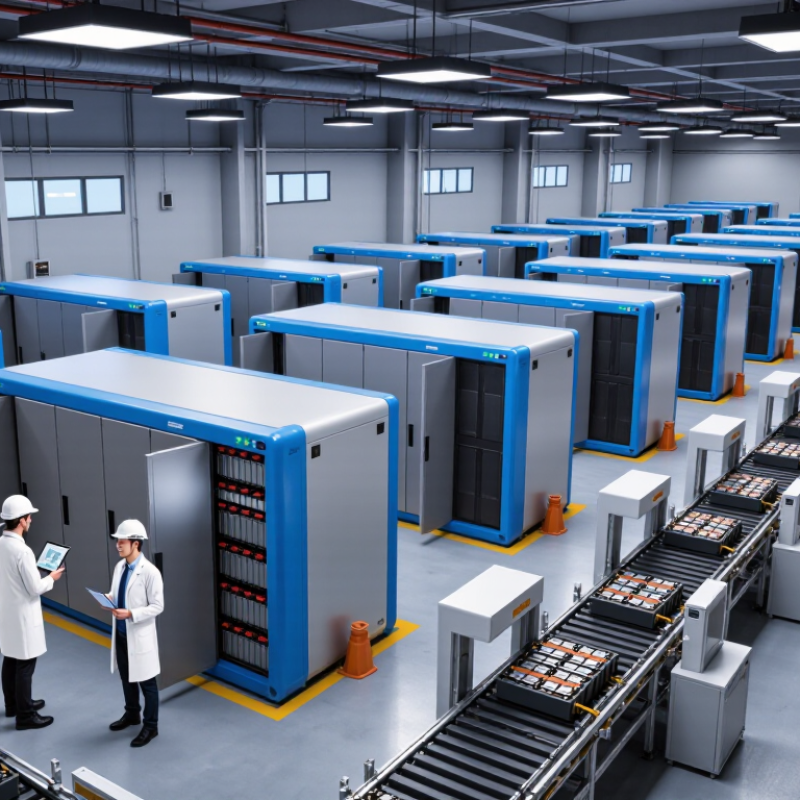
A Battery Energy Storage System (BESS) stores electricity in rechargeable cells and releases it when power is needed. It usually combines battery racks, a battery management system, power conversion equipment, thermal controls, and an energy management system. In a solar project, the batteries may charge at noon, then supply electricity after sunset. In a factory, they can respond within seconds to voltage changes or peak-demand charges.
The numbers show why BESS matters. The International Energy Agency reported that global battery storage additions reached about 42 GW in 2023, nearly doubling from the previous year. The National Renewable Energy Laboratory notes that lithium-ion systems commonly achieve roughly 85% to 95% round-trip efficiency, although temperature, aging, and operating strategy affect real results. A container may look simple outside. Inside, airflow, sensors, fire detection, and software must work continuously. Small failures can reduce available capacity.
Energy capacity and power capacity are different. A 10 MW system rated for four hours stores 40 MWh under stated conditions. That rating can change with degradation. I still find duration labels easy to overread. A reliable BESS specification should state usable energy, response time, cycle assumptions, warranty conditions, and safety testing. These details matter more than impressive headline capacity.
China’s energy storage battery industry has moved from pilot projects to large-scale deployment. In 2023, China’s new energy storage capacity reached 31.39 GW, according to the China Energy Storage Alliance. Most projects used lithium-based batteries because manufacturing capacity, material supply, and engineering experience were already mature. The scale is striking.
Government data shows faster expansion. The National Energy Administration reported 73.76 GW of new-type energy storage capacity by the end of 2024, representing about 168 GWh of energy. This growth supports renewable power integration, peak shaving, and grid flexibility. The International Energy Agency also identified China as a major contributor to global battery storage additions in 2023. Domestic manufacturers increasingly developed complete systems, including battery cells, thermal controls, power conversion equipment, and digital monitoring.
The path has not been perfectly smooth. Some early projects focused too heavily on capacity and less on operating performance. Safety testing, battery degradation, fire protection, and recycling remain practical concerns. Not everything worked. Industry reports have also shown uneven utilization rates across regions, partly because market rules are still developing. Strong manufacturers now compete through longer service life, better temperature management, and clearer performance data rather than low prices alone. China’s next stage will depend on reliable standards, transparent project economics, and field results collected over many operating cycles.
Chinese battery energy storage manufacturers offer several system types for homes, factories, renewable projects, and grid operators. Residential systems usually combine lithium iron phosphate batteries, an inverter, a battery management system, and an energy management controller. Typical capacities range from 5 kWh to 30 kWh. Commercial and industrial cabinets often provide 100 kWh to 1 MWh per unit. They support peak shaving, backup power, solar self-consumption, and demand management. Some designs use air cooling, while larger cabinets increasingly use liquid cooling for steadier temperature control.
Utility projects commonly use containerized systems from 1 MWh upward. These systems may use AC coupling, DC coupling, or hybrid solar integration. Manufacturers also supply portable storage units, microgrid systems, uninterruptible power systems, and sodium-ion prototypes. Flow batteries appear in longer-duration projects, although their market availability remains narrower. The International Energy Agency reported that global battery storage additions exceeded 40 GW in 2023, more than doubling from the previous year. BloombergNEF has also identified China as a major contributor to global stationary storage deployment.
Technical details matter more than capacity alone. Buyers should examine cycle life, usable energy, round-trip efficiency, degradation assumptions, fire detection, thermal management, and software interoperability. A 1 MWh label can mislead if only 90% is usable. Real operating conditions may reduce performance, especially in humid coastal regions or poorly ventilated sites. Chinese suppliers offer broad customization, but documentation quality is not always consistent. Independent testing and project references remain essential before procurement.
| Battery Storage System Type | Typical Battery Chemistry | Typical Capacity Range | Typical Voltage Configuration | Typical Round-Trip Efficiency | Typical Design Life | Main Applications | Common Features Available from Chinese Manufacturers |
|---|---|---|---|---|---|---|---|
| Residential All-in-One Energy Storage System | LFP Lithium iron phosphate | 5–30 kWh per unit | Low-voltage systems: approximately 40–60 V High-voltage systems: approximately 100–500 V | Approximately 85–95% | Typically 10–15 years, depending on operating conditions | Home backup, solar self-consumption, peak-load shifting and limited off-grid operation | Integrated battery modules, battery management system, hybrid inverter, app monitoring, automatic backup switching and modular expansion |
| Residential Modular Battery System | LFP Lithium iron phosphate | 5–100 kWh, depending on the number of modules | Approximately 40–600 V, depending on the series configuration | Approximately 90–96% | Usually rated for 4,000–8,000 equivalent full cycles | Households with changing energy demand, backup power and solar-plus-storage installations | Stackable modules, parallel connection, automatic cell balancing, remote diagnostics and scalable capacity |
| Commercial and Industrial Cabinet ESS | LFP Lithium iron phosphate | 100 kWh–1 MWh per cabinet or system block | Commonly 400–1,500 V DC battery-side voltage | Approximately 85–95% | Typically 10–20 years, subject to depth of discharge and thermal management | Demand-charge reduction, commercial backup, solar smoothing, load shifting and microgrids | Outdoor enclosure, liquid or forced-air cooling, fire detection, smoke detection, emergency shutdown and energy management software |
| Containerized Utility-Scale BESS | LFP Lithium iron phosphate | 1–10+ MWh per container or enclosure | Commonly 1,000–1,500 V DC battery-side voltage | Approximately 85–95% at system level | Generally designed for 10–20 years of service | Grid frequency regulation, renewable-energy integration, capacity support, transmission support and large-scale energy shifting | Pre-assembled battery racks, bidirectional power conversion system, thermal management, fire suppression, auxiliary power and centralized monitoring |
| Solar-Plus-Storage Hybrid System | LFP Lithium iron phosphate | 10 kWh–several MWh, matched to the solar plant size | Low-voltage residential designs or 400–1,500 V DC for larger projects | Approximately 85–95% | Usually 10–20 years for the battery subsystem | Solar self-consumption, renewable-energy firming, curtailment reduction and backup supply | DC-coupled or AC-coupled architecture, solar inverter integration, forecast-based dispatch and black-start capability on selected systems |
| Microgrid and Off-Grid ESS | LFP Lithium iron phosphate | 30 kWh–several MWh | Typically 48 V for small systems; 400–1,500 V DC for larger systems | Approximately 85–95% | Approximately 10–15 years under suitable operating conditions | Remote communities, islands, construction sites, telecom infrastructure and diesel-fuel reduction | Grid-forming inverter operation, generator coordination, black start, islanding control and renewable-source integration |
| Second-Life Battery Energy Storage System | Used lithium-ion Repurposed automotive battery modules | Project-specific; commonly tens of kWh to several MWh | Project-specific, based on the recovered module design | Approximately 75–90%, depending on battery condition and system design | Dependent on remaining capacity, state of health and usage profile | Low-cost stationary storage, renewable integration and demonstration projects | Battery screening, state-of-health assessment, module matching, repackaging and additional monitoring requirements |
| Flow Battery Energy Storage System | Vanadium redox Electrolyte-based flow battery | 100 kWh–multi-MWh systems | System voltage varies by stack and project configuration | Approximately 65–85% | Often 15–25 years, with low capacity degradation because energy is stored in liquid electrolyte | Long-duration storage, renewable-energy time shifting and repeated daily cycling | Independent power and energy sizing, non-flammable electrolyte, deep-discharge capability and long-duration operation |
| High-Power Lithium-Ion ESS | LFP Lithium iron phosphate; other lithium-ion chemistries may be used for specialized designs | 100 kWh–several MWh | Typically 400–1,500 V DC | Approximately 85–95% | Typically 8–15 years, depending on power-to-energy ratio | Fast frequency response, voltage support, power smoothing and industrial peak shaving | High C-rate operation, fast-response power conversion, advanced thermal control and automated grid-support functions |
Note: Capacity, efficiency, cycle life and voltage values are typical industry ranges rather than guaranteed specifications. Actual performance depends on cell selection, system architecture, ambient temperature, depth of discharge, charging rate, installation conditions and operating strategy.
Evaluating China’s best battery energy storage manufacturers requires more than comparing quoted prices. The International Energy Agency reported that global battery storage additions nearly tripled in 2023, reaching about 42 GW. China’s National Energy Administration also recorded 31.39 GW of new energy storage capacity by the end of 2023. This scale creates manufacturing experience, but it does not guarantee dependable equipment.
Ask for cell-level traceability, independently verified cycle-life data, and degradation curves at the intended temperature. A serious supplier should provide test conditions, not only attractive headline figures. Check round-trip efficiency, auxiliary consumption, response time, and capacity retention after repeated cycling. Request documented testing under IEC 62933, UL 9540A, or equivalent local requirements. Thermal propagation results matter more than laboratory slogans.
Financial strength deserves equal attention. Review warranty exclusions, replacement procedures, spare-part locations, and the supplier’s ability to support a ten-year project. Compare total cost per delivered megawatt-hour, rather than the initial container price. Wood Mackenzie’s energy storage research repeatedly identifies supply-chain quality and safety as major project risks. That warning is easy to overlook. Some published performance figures also use different test methods, making direct comparisons imperfect. Require a witnessed factory acceptance test, clear software ownership, and a realistic performance guarantee before signing.
Chinese Energy Storage Systems support several practical applications, especially where electricity prices change during the day. Solar farms can store midday generation and release it after sunset. This reduces curtailment and improves renewable power utilization. Wind projects also benefit when production rises sharply overnight.
Commercial buildings use battery systems for peak shaving. A warehouse, for example, may charge batteries at 2 a.m. and discharge them during afternoon demand peaks. This can reduce demand charges and protect sensitive equipment from short interruptions. Cold-storage facilities, factories, and data centers often need this flexibility. The numbers matter. Operators should examine load curves, tariff rules, and backup requirements before choosing capacity.
Chinese manufacturers also serve remote microgrids, construction sites, and telecommunications infrastructure. In a village microgrid, batteries can stabilize solar output and maintain lighting after sunset. Integrated battery management systems monitor cell voltage, temperature, and state of charge. Thermal controls are important in hot or humid regions. However, performance depends on installation quality, software settings, and maintenance access. No system is perfect. A low purchase price may hide higher transport, commissioning, or replacement costs. Buyers should verify safety testing, grid compatibility, warranty terms, and technical support. Independent inspection remains valuable, even when factory documentation appears complete. Specification sheets can look impressive. Field conditions are less forgiving.
China’s new energy storage capacity increased from approximately 8.7 GW in 2022 to 73.76 GW in 2024. Battery energy storage systems particularly benefit renewable-energy integration, peak-load shifting, grid frequency regulation, and commercial and industrial backup power.
Source: China National Energy Administration public data. Figures represent cumulative installed power capacity of China’s new energy storage projects, excluding conventional pumped-hydro storage.