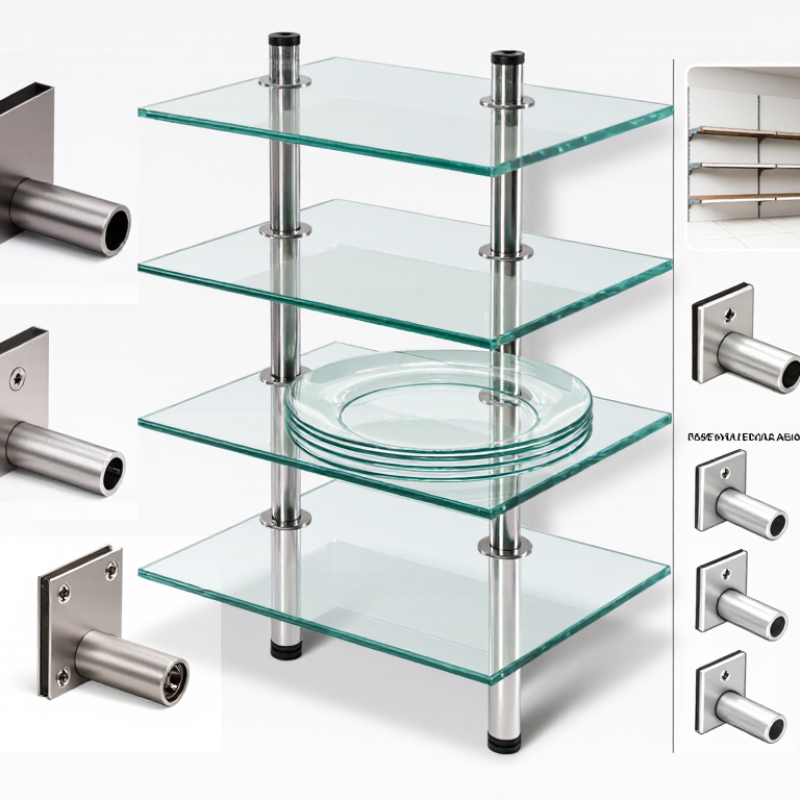
How to Choose the Best China Glass Shelf Brackets Supplier?

Choosing the right Glass Shelf Brackets Supplier requires more than comparing online prices. The supplier must understand how brackets perform in homes, retail displays, hotels, and commercial interiors. A reliable partner should explain glass thickness, load capacity, mounting surfaces, and installation limits clearly. Vague promises are warning signs.

Look for practical manufacturing experience. Ask whether the brackets are made from stainless steel, aluminum, or another suitable material. Check the finish against real samples, not only digital images. A polished surface may look attractive but still show scratches after handling. Request dimensional drawings, product samples, inspection records, and packaging details. These small items reveal how seriously a supplier manages quality. They also help prevent cracked glass, loose fittings, and expensive project delays.

A professional Glass Shelf Brackets Supplier should provide consistent communication from quotation to shipment. Confirm production lead times, minimum order quantities, replacement policies, and customization capabilities. Ask how the supplier checks drilling positions, screw threads, surface treatment, and load performance. Independent testing or documented factory inspections can add useful confidence. Still, paperwork alone cannot prove every claim. Sample approval matters.

Think beyond the lowest offer. A cheaper bracket may require more installation labor or create safety concerns later. I have seen attractive quotations hide unclear tolerances and incomplete accessory lists. That gap deserves attention. No checklist is perfect. However, careful questions, physical samples, and transparent records make supplier selection more dependable. This guide explains the key points buyers should examine before choosing a China-based supplier for glass shelf bracket projects.

How to Choose the Best China Glass Shelf Brackets Supplier?

Define Your Glass Shelf Bracket Requirements

Before comparing suppliers, define the job in measurable terms. Record glass thickness, shelf width, depth, and expected load. A 900 mm shelf holding books needs different support than a display shelf holding candles. Measure twice. Note whether the glass is tempered, laminated, clear, tinted, or textured. Its edge finish also matters, especially near clamp contact points. I have seen small measurement errors create visible gaps and uneven pressure. That detail is easy to underestimate.

Specify mounting conditions with equal care. Is the bracket fixed to concrete, tile, wood, or a hollow wall? Identify stud locations and available fixing depth. For humid rooms, request corrosion-resistant material and a finish that tolerates frequent cleaning. Ask suppliers for load data, recommended spacing, screw specifications, and installation tolerances. Do not accept a vague “heavy-duty” claim. Request drawings, material details, test methods, and sample pieces. A physical sample may reveal sharp edges, weak threads, or a finish unlike the photograph.

Write your requirements in a simple inspection sheet. Include quantity, dimensions, hole positions, acceptable color variation, packaging, and replacement procedures. Clarify whether the supplier can maintain the same specification across repeat orders. Independent test reports can support confidence, but check their date and scope. Small details matter. I would also ask how damaged items are handled. My early specifications were too general, and the supplier filled gaps with assumptions. That mistake taught me to leave fewer decisions unstated, while still accepting practical suggestions from an experienced manufacturer.

How to Choose the Best China Glass Shelf Brackets Supplier? - Define Your Glass Shelf Bracket Requirements

Requirement Details to Define Practical Selection Guidance Information to Request from the Supplier
Glass thickness Specify the exact glass thickness in millimetres, such as 6, 8, 10, or 12 mm. Choose a bracket designed for the measured glass thickness. Clamp-style brackets may have a defined thickness range; do not assume one model fits every size. Compatible thickness range, adjustment method, and confirmation that the glass-contact surfaces will not damage the glass.
Glass type and edge finish Identify whether the shelf is made from annealed, heat-strengthened, or fully tempered glass, and specify polished or otherwise finished edges. Match the bracket installation method to the glass specification. Any holes or cut-outs should be planned before glass is tempered. Glass compatibility, required hole or cut-out dimensions, and installation instructions for the specified glass.
Shelf dimensions Provide the shelf width, depth, shape, and intended overhang beyond each support. Bracket spacing and shelf projection affect stability. Confirm the support layout for the actual shelf dimensions rather than selecting by appearance alone. Recommended bracket spacing, suitable shelf dimensions, and any restrictions on overhang or projection.
Load requirement State the intended load per shelf and whether it will be evenly distributed or concentrated in particular areas. Ask how the stated capacity was determined. The wall, anchors, bracket spacing, glass, and installation quality all affect the finished shelf's capacity. Test method, rated load conditions, recommended safety margin, and whether capacity is specified per bracket or per pair.
Mounting surface Identify the substrate, such as solid concrete, brick, timber framing, or a stud-supported wall. Select fixings appropriate to the substrate. A bracket's capacity alone does not establish the capacity of the complete wall-mounted installation. Recommended fixing type and size, substrate limitations, and installation guidance. Confirm whether fixings are included.
Bracket configuration Choose between a glass clamp, a support with a locating lip, or a design that requires drilled glass, depending on the application. Clamp designs can avoid drilling the shelf, while drilled designs require accurately positioned holes prepared before tempering. Drawings, dimensions, installation method, and confirmation of whether drilling or other glass preparation is required.
Material and finish Specify the visible material and finish, such as stainless steel or plated metal, and the desired appearance. For damp locations, check the material grade and finish suitability for the actual exposure. Appearance alone does not establish corrosion resistance. Material specification, finish description, care instructions, and available samples for colour and surface review.
Installation environment State whether the brackets will be used indoors, in a bathroom, near a kitchen sink, or in another exposed environment. Moisture, cleaning products, and salt exposure can affect material and finish performance. Specify the environment before requesting a quotation. Recommended applications, environmental limitations, and any maintenance requirements.
Quantity and packaging Provide the required number of brackets, shelves, or complete sets, along with any spare-part needs. Clarify whether the quoted unit is one bracket, one pair, or one installation set to avoid quantity and price misunderstandings. Quotation unit, minimum order quantity, packing configuration, and spare-part availability.
Quality and documentation List the inspection records, material information, drawings, or test documents required for your project. Set acceptance criteria before production, including dimensions, finish, glass fit, and any agreed load-test conditions. Product drawings, inspection records, material documentation, and relevant test reports applicable to the offered model.
Order and delivery requirements Specify the required order quantity, delivery destination, target schedule, and packaging needs. Request a written quotation that separates product cost, tooling or sample charges, packaging, and shipping where applicable. Production lead time, sample lead time, packing details, quotation validity, and delivery terms.

Bracket compatibility and load capacity vary by design and installation conditions. Confirm the final specification with the supplier and a qualified installer before use.

Evaluate Supplier Materials, Designs, and Manufacturing Standards

How to Choose the Best China Glass Shelf Brackets Supplier?

When evaluating a China glass shelf brackets supplier, inspect the material before admiring the design. Stainless steel, aluminum, and zinc alloy each offer different strength, weight, and corrosion resistance. Ask for material grades, surface-treatment details, and sample pieces. A brushed finish should feel even, not rough around drilled holes. Small details matter. In my experience, a beautiful bracket can still fail when its wall plate is too thin.

Design quality should match the glass and installation environment. Check load ratings, screw positions, glass thickness ranges, and protective pads. Silicone or rubber inserts can reduce slipping and prevent edge damage. Request engineering drawings with tolerances, not only attractive product photographs. Some suppliers adjust dimensions after sampling, and I have learned that verbal promises are easy to misunderstand.

Tips: Compare physical samples from several suppliers. Ask how load tests are performed and how often testing equipment is calibrated. Review inspection records, packaging methods, and batch traceability. Manufacturing standards should cover drilling accuracy, welding consistency, coating thickness, and final inspection. Certificates can support credibility, but they do not replace independent checks. A small trial order may reveal more than a long presentation. Allow room for doubt. Even experienced buyers can overlook a weak fastener or poorly protected corner.

How to Choose the Best China Glass Shelf Brackets Supplier?

Evaluate suppliers by combining material quality, design capability, and manufacturing standards. The recommended weighting below prioritizes the factors that most directly affect safety, durability, and long-term purchasing reliability.

How to use this chart: Ask suppliers for material certificates, corrosion-resistance information, load-test reports, dimensional drawings, surface-finish samples, quality-management evidence, and inspection records before making a final decision.

Check Quality Control, Certifications, and Product Reliability

How to Choose the Best China Glass Shelf Brackets Supplier?

Quality control should be visible, not merely promised.

During supplier checks, ask how stainless steel, zinc alloy, or aluminum materials are received and recorded. Reliable factories measure thickness, surface finish, and load performance for every production batch. Request inspection photos, material reports, and sample test records. A polished bracket can still fail under repeated pressure.

Certifications also require careful verification. Check whether the supplier holds ISO 9001 or relevant product quality certifications. Confirm the certificate number, issuing organization, validity period, and covered factory address. A document from a trading office may not represent the actual manufacturer. That detail matters.

Ask for recent audit results and corrective action records. Suppliers should explain defects clearly, rather than hiding behind general claims.

Product reliability needs practical testing.

Request samples with the same glass thickness, screw type, and mounting surface used in your project. Test them for load capacity, vibration, corrosion resistance, and repeated installation. Examine screw threads, rubber pads, edges, and plating under bright light.

I once overlooked packaging strength, and several metal brackets arrived scratched. The product worked, but the shipment created avoidable costs. This experience changed my inspection checklist.

Still, no checklist catches everything. Keep a written tolerance standard, approve a pre-production sample, and compare mass production against that sample. Suppliers who share data openly usually provide stronger long-term support.

Compare Pricing, Minimum Orders, and Customization Options

How to Choose the Best China Glass Shelf Brackets Supplier?

Price matters, but the lowest quote is rarely the complete cost. Compare unit prices, tooling fees, packaging, inspection charges, and shipping terms. Request a detailed quotation for the same bracket material, finish, glass thickness, and order quantity. A supplier quoting $0.80 may become more expensive after custom molds or reinforced cartons are added. Ask whether the price changes at 500, 2,000, and 10,000 pieces. This reveals real production economics.

Minimum order quantities can affect cash flow and storage space. A smaller MOQ may suit a trial project, while larger orders often reduce the unit price. Confirm whether the supplier supports mixed finishes or several sizes within one order. Customization deserves equal attention. Discuss drawings, screw placement, load requirements, surface treatment, logo marking, and sample costs. Request a pre-production sample before approving mass production. I underestimated packaging risks once; a strong bracket still fails commercially if cartons arrive damaged.

Tips: Compare at least three written quotations. Check what each price includes. Ask for sample lead time, production capacity, quality records, and replacement procedures. A reliable supplier should explain limitations clearly, not promise everything instantly. Keep technical details in one approved document. Small misunderstandings can change a hole position or weaken installation. Supplier communication may seem efficient, yet vague answers deserve a second question.

Verify Communication, Shipping, and After-Sales Support

How to Choose the Best China Glass Shelf Brackets Supplier?

When choosing a China glass shelf brackets supplier, test communication before discussing large quantities. Send a drawing with glass thickness, hole positions, finish, and load requirements. A reliable supplier should confirm unclear details instead of guessing. Ask for material information, surface treatment details, and a sample approval process. Keep every decision in writing. Small wording differences can create costly production errors.

Shipping deserves the same attention. Request a realistic production schedule, packing photos, carton dimensions, and complete tracking details. Brackets should be separated, protected from scratches, and packed tightly to prevent movement. Ask how the supplier handles damaged cartons or delayed documents. A low quotation may become expensive after repacking, storage, or replacement shipping. Delivery promises can also change, so include milestone dates in the purchase agreement.

After-sales support shows whether the supplier values long-term cooperation. Confirm the warranty period, response time, evidence required, and replacement procedure. Ask whether spare brackets or screws can be supplied separately. Use photos and short videos during inspection. In practical sourcing work, I once trusted a fast response too much and missed a small finish inconsistency. The issue was fixable, but the delay was not. That experience taught me to request a signed sample, not only a digital image. Good suppliers may not answer perfectly every time, but they explain problems clearly and record corrective actions. Reliability is visible in those details.