How to Choose the Best Electric Drive for Your Business Needs?
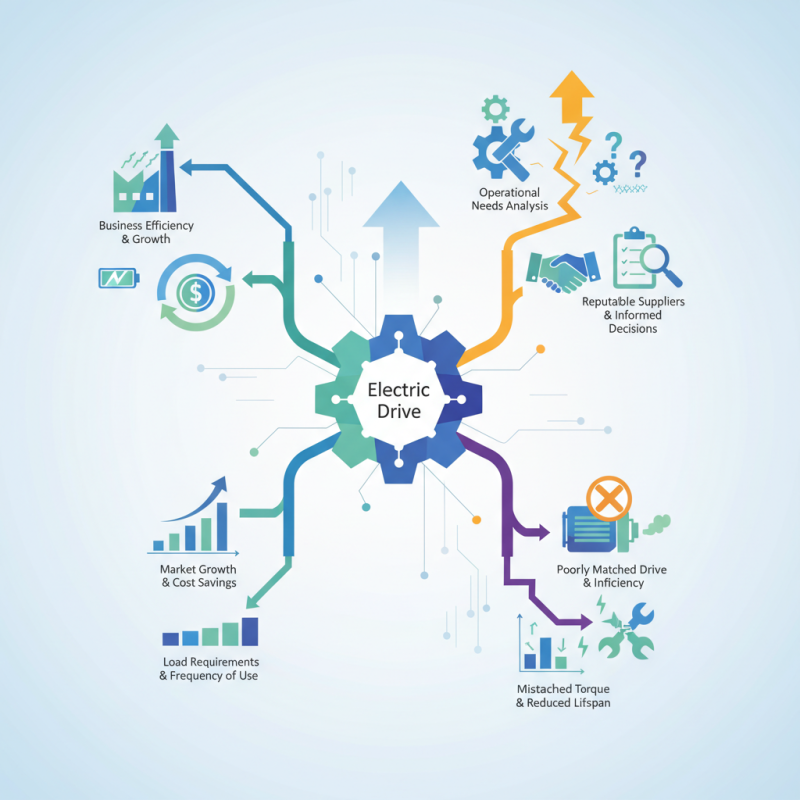
Selecting the right Electric Drive is crucial for business efficiency and growth. The global electric drive market is projected to reach $190 billion by 2027, according to recent industry reports. Companies are increasingly turning to electric drives for their reliability and energy efficiency. However, navigating the selection process can be challenging.
Understanding operational needs is essential before making a choice. Many businesses overlook specific requirements, leading to inefficiencies. A poorly matched Electric Drive can result in energy waste and increased operational costs. For example, mismatched torque ratings can strain equipment, reducing lifespan.
Industry experts recommend conducting a thorough analysis of both application needs and energy sources. Consider factors such as load requirements and frequency of use. Partnering with reputable suppliers enhances the likelihood of success. This collaboration can provide valuable insights and facilitate informed decisions. Remember, the right Electric Drive can lead to significant cost savings and improved performance.
Understanding the Different Types of Electric Drives Available in the Market
When selecting the ideal electric drive for your business, it’s essential to understand the various types available. Electric drives come in several forms, including AC drives, DC drives, and stepper motors. Each type has unique characteristics that cater to specific applications.
AC drives are popular for their efficiency and versatility. They are commonly used in industrial machinery and fans. DC drives, on the other hand, provide smooth and precise speed control. They are often employed in smaller applications like conveyors and servo systems.
Stepper motors offer precise positioning, making them ideal for robotics and automation tasks. Their incremental movement allows for exact control, but they may struggle under high loads. It’s vital to weigh the pros and cons of each type based on your operational requirements. Choosing the wrong drive can lead to inefficiencies. For instance, using a stepper motor for a heavy application may result in insufficient power.
Take your time to analyze your business needs, and consult with experts when necessary. Performance factors like torque, speed, and load capacity are critical. Reflect on your current and future needs to avoid mismatches. Selecting an electric drive isn’t just about initial costs; it’s about long-term efficiency and reliability.
Identifying Your Business Requirements for Electric Drive Systems
Identifying your business requirements for electric drive systems is crucial. Start by assessing your operational tasks. Consider the types of loads you will move and the environment in which your drives will operate. Specific requirements, such as speed, torque, and efficiency, must align with your processes. Gathering data on these factors will help you make informed decisions.
Explore the different applications within your business. Some areas might need higher precision while others value speed. It’s important to identify any unique challenges. For example, if your industry involves frequent starts and stops, you’ll need a drive that can handle that. Insights from team members on the floor can also uncover hidden needs.
Budget constraints are another consideration. Sometimes, the cheapest option may not meet all requirements. Investing in the right drive can lead to savings in the long run. Reflecting on these points can lead to better choices. Finding the perfect fit is often a process of trial and error. Prioritizing both immediate and future needs will ensure long-term satisfaction.
Electric Drive System Efficiency Comparison
Evaluating Performance Factors and Specifications for Electric Drives
When selecting an electric drive, performance factors and specifications become crucial. Motor efficiency is a primary consideration. According to recent industry reports, the average efficiency of electric drives has improved to over over 90%. This means less energy loss and reduced operational costs. High-efficiency drives can save businesses thousands in energy expenses annually.
Another important factor is torque performance. The peak torque impact can vary greatly between different electric drive systems. Some reports highlight that systems with higher torque density can provide better acceleration and load-handling capabilities. Choosing a system that matches specific application needs is essential.
Additionally, the control technology used can significantly affect performance. Advanced control algorithms can enhance responsiveness and precision. However, integrating these technologies requires expertise. It is crucial to evaluate the technical support and expertise available from suppliers. Businesses often overlook the importance of long-term maintenance and support, which can lead to system failures and unexpected costs.
Cost Considerations and Budgeting for Electric Drive Solutions
When considering electric drive solutions, budgeting is crucial. Understand your financial limitations before diving into options. The initial purchasing cost is just one part of the equation. Look at installation costs, maintenance, and energy efficiency. These elements often add up quickly. For examples, long-term savings may come from choosing a more efficient model, even if it costs more upfront.
Evaluating total cost of ownership is essential. Think beyond just price tags. Expenses like servicing and unforeseen breakdowns can strain budgets. Create a financial plan that includes these factors. Gather data from trusted sources to understand typical expenses in your sector. This research can guide you toward more informed decisions.
Don't overlook your teams' skills and resources. Training and adaptation costs can impact your budget too. Sometimes, opting for a simpler solution may require less training. Consider the full scope of costs and unforeseen challenges. Balancing cost with value requires thoughtful deliberation. Identifying your specific needs will streamline your process.
How to Choose the Best Electric Drive for Your Business Needs? - Cost Considerations and Budgeting for Electric Drive Solutions
| Electric Drive Type | Cost Range (USD) | Efficiency (%) | Maintenance Cost (Annual) | Best Applications |
| Servo Drives | $1,000 - $5,000 | 85 - 95 | $200 | Robotics, CNC Machines |
| Variable Frequency Drives (VFD) | $500 - $3,000 | 80 - 95 | $150 | Pumps, Fans, Conveyors |
| DC Drives | $800 - $4,000 | 70 - 90 | $180 | Textile, Plastic, Metal |
| Programmable Logic Controllers (PLCs) | $1,500 - $10,000 | 75 - 90 | $300 | Manufacturing Automation |
Assessing Vendor Reliability and Support Services for Electric Drives
When selecting an electric drive, vendor reliability and support services are crucial factors. A reliable vendor should provide robust technical support. This includes timely responses to inquiries and efficient troubleshooting. Assess how accessible their customer service is. Can you reach them via phone, chat, or email?
Consider the importance of documentation and training. Quality vendors provide extensive user manuals and training resources. These materials help staff learn to use the equipment effectively. Look for vendors that offer on-site training or webinars. Such services ensure your team feels confident operating the drives.
Another key aspect is warranty and maintenance services. A reliable vendor should offer comprehensive warranty options. Additionally, inquire about their maintenance schedules. Regular servicing can extend the lifespan of your electric drives. However, not all vendors prioritize this. Be cautious of those that gloss over after-sales support. Make sure you understand their policies before commitment.