For over 50 years, we have dedicated ourselves to providing Industry with best in class wire management solutions and to helping solve mission critical issues.
The needs of today’s schools and universities are changing fast. When it comes to anticipating and meeting those needs, MonoSystems is in a class of its own.
For the past five decades, we’ve made it our business to offer more value to our partners, which in turn provides greater value to their customers.
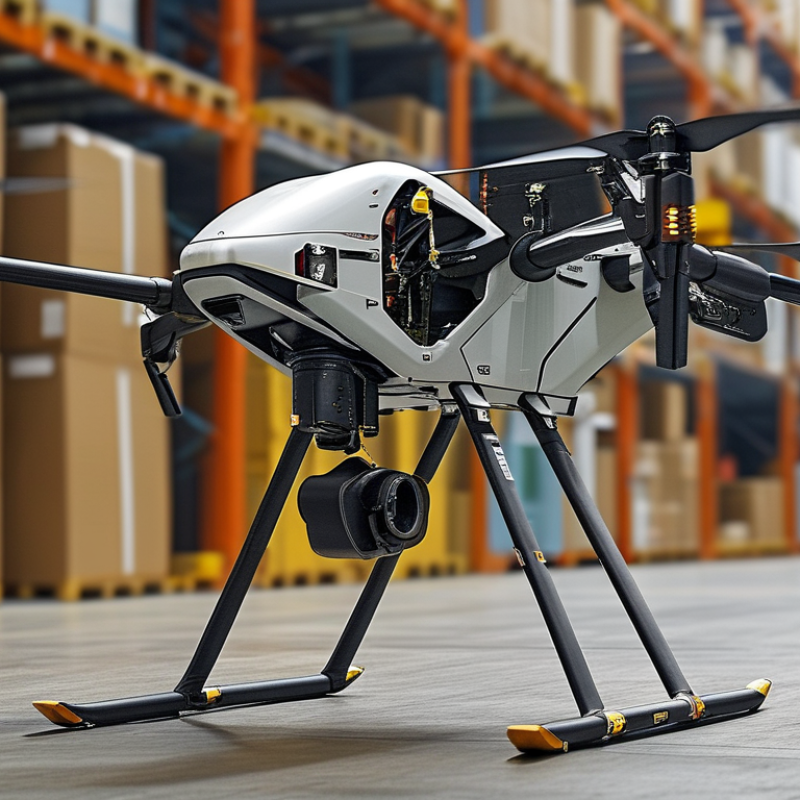
Choosing a Heavy Cargo Drone is not simply a matter of selecting the largest payload rating. A published figure may describe ideal conditions, not a complete delivery mission. The real decision connects payload, range, weather tolerance, battery reserves, loading time, maintenance, and operational readiness. A drone rated for 100 kilograms may carry much less after batteries, safety equipment, and route margins are included. That difference matters beside a warehouse ramp, where every extra minute can affect labor costs and battery temperature.
Industry forecasts show why buyers need disciplined comparisons. MarketsandMarkets’ Cargo Drones Market report projects strong growth through 2028. Grand View Research also forecasts rapid expansion in the drone logistics and transportation sector through 2030. Their market boundaries and research methods differ, so the figures should not be treated as exact demand. Drone Industry Insights reports likewise highlight commercial applications, fleet economics, and service models, rather than aircraft size alone. The market is growing. The evidence remains uneven.
This guide examines how to compare Heavy Cargo Drone platforms through practical operating questions. Can the aircraft lift its stated load in heat, wind, and rain? How quickly can its batteries be replaced? Is technical support available near the intended route? What happens when a sensor fails? These questions often reveal more than a glossy specification sheet. Buyers should also verify manufacturer test conditions, independent flight data, maintenance records, and applicable aviation requirements. No single report settles the decision. A cautious evaluation may feel slower, but it can prevent an expensive mismatch between impressive specifications and real cargo work.
How to Choose the Best Heavy Cargo Drone?
Define the Cargo Mission, Payload Needs, and Operating Environment
Choosing a heavy cargo drone starts with the mission, not the aircraft. Define the route, delivery frequency, and required turnaround time. A short construction-site flight differs from a remote medical supply mission. List every cargo item, including packaging, straps, and protective cases. Their combined weight becomes the real payload requirement.
Payload shape matters too. A compact load may fit inside a standard bay, while long pipes need external support. Check the center of gravity before every flight. An uneven load can reduce stability and increase battery use. Leave practical reserve capacity. Maximum payload is not a comfortable operating target.
Weather and terrain can change the decision completely. Strong wind, dust, rain, altitude, and narrow landing areas require careful testing. Measure the launch site, obstacle clearance, and recovery space. Review local aviation rules and operator qualifications before field trials. Keep maintenance records, battery cycles, inspection notes, and delivery logs. Reliable data supports safer choices.
A common mistake is planning around ideal weather. Real operations are rarely ideal. I would test the drone with the heaviest realistic load, not an empty frame. Repeat the route with changing wind conditions. Small issues appear quickly. A weak tie-down, slow battery swap, or poor landing surface may matter more than advertised lifting power.
Define the cargo mission, payload needs, and operating environment before selecting an aircraft configuration.
These representative mission-planning requirements show how payload mass, one-way route distance, and required flight endurance increase from medical resupply to remote construction logistics. Actual selection should also verify wind, temperature, terrain, takeoff area, battery reserve, and local aviation regulations.
Choosing the best heavy cargo drone starts with its real payload, not its advertised maximum. A stated capacity may exclude batteries, straps, and the loading frame. Weigh the complete cargo package before comparing aircraft. Weight matters. I recommend testing the drone with a representative load, such as a 35-kilogram crate, rather than using empty-aircraft figures. Check how the center of gravity changes during lifting. An unstable load can reduce control accuracy and increase battery use.
Range and flight time should be measured with the intended payload. A drone flying 20 kilometers empty may travel far less with a full load and strong wind. Review test conditions, including temperature, altitude, and wind speed. Flight time must also include takeoff, delivery, return, and a sensible battery reserve. In field tests, I record voltage, payload weight, and landing time. Weather changes. Published numbers are useful, but they are not guarantees.
Loading systems affect daily productivity. A winch can lower cargo without landing, while a cargo box may protect fragile items during transport. Fork-style platforms can load quickly, but they need level ground and careful alignment. Consider loading time, operator visibility, locking points, and emergency release procedures. I once underestimated loading delays by focusing only on flight performance. That mistake changed the schedule. Reliable selection comes from reviewing test records, maintenance access, training needs, and independent safety requirements before purchase.
Choosing the best heavy cargo drone starts with its airframe, not its advertised payload. A reliable design should carry the planned load with structural margin, stable center-of-gravity control, and protected propulsion systems. The FAA Aerospace Forecast 2024–2044 reports more than 800,000 registered drones in the United States, making disciplined equipment selection increasingly important. Compare payload capacity, empty weight, battery endurance, weather tolerance, and loading time. A drone that carries 100 kilograms in calm air may perform very differently in wind. Real conditions matter.
Navigation should combine satellite positioning with inertial sensors, terrain awareness, and visual or radar-based obstacle detection. Redundancy is essential. If one sensor fails, the aircraft should remain controllable and return safely. Interact Analysis’s 2024 commercial drone research identifies autonomy and fleet-management systems as major growth areas, but autonomy does not remove operational responsibility. Control software should limit excessive bank angles, monitor battery temperature, protect against signal loss, and manage emergency landing routes. Test these functions with empty and full payloads. Small mistakes become expensive quickly.
Safety features deserve measurable evidence, not impressive terminology. Look for preflight diagnostics, independent power paths, encrypted communications, geofencing, remote identification compliance, and documented maintenance intervals. The European Union Aviation Safety Agency’s drone safety guidance emphasizes risk assessment, operational procedures, and contingency planning. Ask for failure-rate data and flight-test records. Marketing claims are not evidence. I would also question perfect-looking performance charts; they often hide wind, temperature, and payload assumptions. No checklist is perfect. That is precisely why operators should review every flight and revise the selection criteria.
| Evaluation Dimension | Medium-Lift Multirotor | Heavy-Lift Multirotor | Hybrid VTOL Cargo Drone | Recommended Selection Criteria |
|---|---|---|---|---|
| Typical Payload Capacity | 10–30 kg | 30–100 kg | 20–80 kg | Select a payload rating at least 20% higher than the maximum routine cargo weight. |
| Maximum Takeoff Mass | 25–60 kg | 70–180 kg | 60–150 kg | Confirm that the aircraft, cargo, batteries, and safety equipment remain within the certified maximum takeoff mass. |
| Airframe Configuration | Hexacopter or octocopter | Coaxial octocopter or distributed-lift design | Fixed-wing aircraft with multiple lift rotors and cruise propellers | Multirotors provide precise hovering; hybrid VTOL designs are more efficient for long-distance transport. |
| Structural Materials | Carbon-fiber tubes, aluminum fittings, impact-resistant polymer components | Reinforced carbon-fiber arms, aluminum or composite landing gear, protected cargo frame | Composite fuselage, carbon-fiber wings, reinforced payload bay | Use corrosion-resistant materials and inspect load-bearing joints, fasteners, and landing gear regularly. |
| Payload Attachment | Rigid cargo box or four-point sling | Lockable cargo container, winch, or certified sling system | Internal cargo bay or mechanically locked external pod | The payload system should prevent shifting, accidental release, and center-of-gravity changes during flight. |
| Typical Flight Endurance | 15–35 minutes | 10–30 minutes at high payload | 45–120 minutes, depending on payload and cruise speed | Calculate endurance using the actual cargo mass, wind, temperature, reserve energy, and takeoff conditions. |
| Practical Operating Range | 5–20 km | 3–15 km | 30–150 km | Range must include the outbound route, return or diversion distance, communication margin, and legally required reserve. |
| Cruise Speed | 30–60 km/h | 25–55 km/h | 70–130 km/h in forward-flight mode | Choose a multirotor for short, low-speed delivery routes and a hybrid VTOL platform for extended routes. |
| Propulsion Redundancy | Six or more motors with monitored electronic speed controllers | Eight or more motors, preferably with independent power and control paths | Redundant lift motors plus independent cruise propulsion | The aircraft should maintain controlled flight or execute a safe landing after a single propulsion fault where the design permits. |
| Energy Storage | High-voltage lithium battery packs with battery-management systems | Multiple isolated battery packs with cell-temperature and voltage monitoring | Battery-electric lift system with battery, fuel, or hybrid-electric cruise system | Check usable energy rather than nominal capacity, and include a reserve for unexpected wind or diversion. |
| Navigation Sensors | Multi-constellation GNSS, inertial measurement unit, barometer, magnetometer | Dual GNSS or GNSS with inertial navigation, radar or laser altimeter, terrain awareness | Dual GNSS, inertial navigation, air-data sensors, barometer, and terrain or radar altitude sensing | A suitable system should continue stable navigation during temporary GNSS degradation or short signal interruptions. |
| Positioning Accuracy | Approximately 1–3 m with standard satellite positioning; centimeter-level with correction services | Approximately 1–3 m with standard satellite positioning; centimeter-level with correction services | Approximately 1–3 m with standard satellite positioning; centimeter-level with correction services | Use corrected positioning only when the operating area has reliable correction coverage and an independent fallback. |
| Obstacle Detection | Forward, downward, and side-facing cameras or lidar | 360-degree sensing using lidar, radar, cameras, or a combined sensor set | Forward radar or lidar, terrain sensing, and landing-zone detection | Sensor coverage should match the aircraft's speed, stopping distance, rotor span, and operating environment. |
| Terrain and Landing Assistance | Downward optical flow, lidar, or radar altimeter | Radar or lidar altimeter with landing-zone assessment | Radar altimeter, terrain database, and automated approach or landing guidance | For uneven or unprepared sites, prioritize accurate low-altitude sensing and landing-zone verification. |
| Control Architecture | Redundant flight controller with stabilized manual, assisted, and automatic modes | Dual flight computers, monitored actuator outputs, and independent emergency logic | Separate flight-control functions for VTOL, transition, cruise, and return-to-home operations | Control software should provide clear mode status, fault alerts, geofencing, and operator override. |
| Communication Link | Encrypted command and telemetry link with cellular or radio backup | Redundant long-range links with automatic link-quality monitoring | Long-range command link with cellular, satellite, or radio redundancy where permitted | Design the link budget for terrain, antenna placement, interference, and the maximum legal operating distance. |
| Loss-of-Link Response | Return to home, hover, land, or proceed to a predefined safe point | Return, controlled holding pattern, or alternate landing site with cargo-release lockout | Route continuation, diversion, loiter, or automated landing based on the current flight phase | The response must be configurable, predictable, and tested under realistic communication-loss conditions. |
| Power-Failure Protection | Battery health monitoring, low-voltage warning, and reserve-energy landing logic | Independent battery packs, thermal monitoring, and automatic emergency landing procedures | Separate energy management for lift and cruise systems with controlled transition or landing modes | Require automatic warnings before reserve energy is reached and prevent launch when battery condition is unsafe. |
| Cargo Safety | Mechanical restraint, door sensor, and payload-presence verification | Positive locking mechanism, load monitoring, and emergency cargo-release prevention | Locked cargo bay, door-status monitoring, and center-of-gravity limits | Cargo must remain secured during acceleration, turbulence, landing impact, and emergency maneuvers. |
| Weather Capability | Light rain and moderate wind only when permitted by the approved operating limits | Weather-resistant components with strict limits for wind, precipitation, icing, and visibility | Higher cruise-wind tolerance but greater sensitivity to icing, turbulence, and runway or landing-site conditions | Never infer weather capability from appearance; use documented limits and current site weather data. |
| Wind Tolerance | Commonly about 8–12 m/s, depending on payload and airframe | Commonly about 8–12 m/s, with reduced endurance at higher wind speeds | Often better in cruise, but VTOL takeoff and landing may remain limited to approximately 8–12 m/s | Evaluate gusts, crosswinds, wind direction, and the effect of wind on return-flight energy reserves. |
| Operational Safety Features | Geofencing, remote identification where required, strobe lighting, propeller guards, and emergency stop logic | Geofencing, remote identification where required, conspicuity lighting, redundant controllers, and emergency landing management | Geofencing, remote identification where required, aviation lighting, flight-phase protection, and terrain-aware diversion logic | Verify that safety functions are documented, independently tested, and compatible with local aviation requirements. |
| Maintenance Requirements | Frequent inspection of motors, propellers, batteries, arms, and landing gear | Detailed inspection of propulsion units, structural joints, cargo restraints, batteries, and cooling systems | Inspection of lift motors, cruise propulsion, wings, control surfaces, transition mechanisms, and energy systems | Choose a platform with documented inspection intervals, accessible components, diagnostic logs, and replaceable parts. |
| Best-Fit Mission | Short-range delivery, construction sites, farms, and precise point-to-point lifting | Heavy loads over short distances where hover precision and vertical access are essential | Long-distance logistics, remote-area supply, medical transport, and routes with limited road access | Match the aircraft to route length, cargo mass, takeoff and landing conditions, and required delivery accuracy. |

Note: Performance values are representative engineering ranges, not guarantees. Actual capability depends on aircraft configuration, payload shape, battery condition, altitude, temperature, wind, route profile, regulatory restrictions, and the manufacturer's approved operating limitations.
How to Choose the Best Heavy Cargo Drone?
Regulatory checks should guide the purchase, not follow it. Confirm permitted flight zones, weight limits, pilot requirements, and registration rules before comparing aircraft. Regulations may differ between regions and even between industrial sites. Ask the local aviation authority for current guidance. Written confirmation is safer than assumptions.
Maintenance planning reveals the drone’s real value. Review inspection intervals, battery storage requirements, spare-part access, and repair procedures. A strong maintenance log should record flight hours, battery cycles, faults, and corrective work. Examine how quickly technicians can replace motors, landing gear, or sensors. Small delays can stop an entire delivery schedule. They often do. Training also deserves a practical test, not only a classroom certificate. Operators should practice emergency landings, changing weather, load attachment, and communication failures. Ground crews need training too, especially when securing uneven cargo. A short demonstration may expose weaknesses that brochures hide.
Operating cost includes more than electricity. Calculate pilot wages, insurance, software, batteries, inspections, storage, and possible downtime. Compare cost per completed flight, not cost per unit. My early estimates were too optimistic because I ignored weather delays and battery replacement. That mistake changed the purchasing model. Keep a reserve budget for repairs and retraining. A cheaper aircraft can become expensive when support is slow or documentation is unclear. Test the drone with representative cargo before signing a long-term agreement. Use real distances, real loading times, and realistic weather conditions.
How to Choose the Best Heavy Cargo Drone?
Test shortlisted heavy cargo drones before making the final choice. Specifications alone can mislead buyers. The FAA reported more than 860,000 registered drones in the United States at the end of 2023. This growing fleet increases competition, but it does not guarantee dependable cargo performance. Test each aircraft with the real container, payload, route, and loading process. Do not trust empty-airframe range claims. They are often too optimistic.
Create a controlled field trial with repeated flights. Record takeoff weight, battery percentage, flight time, wind speed, temperature, and landing accuracy. Measure payload delivered, energy used per kilogram-kilometer, turnaround time, noise, and communication stability. Drone Industry Insights’ 2024 market analysis identifies logistics as a major commercial growth area. Demand is rising. Operational risks remain. Use an independent observer to record results, because internal test notes may overlook uncomfortable failures.
Compare the results with your actual delivery requirement. PwC’s “Clarity from Above” report estimated a potential US$127 billion in business value from drone technology. That estimate shows opportunity, not guaranteed savings. A drone carrying 100 kilograms for ten minutes may still fail your route. Test with uneven loading, cold batteries, moderate wind, and delayed handling. Keep a meaningful energy reserve. One successful flight proves very little. Real cargo exposes weaknesses.