Essential Tips for Using Coiling and Packing Machines Efficiently?

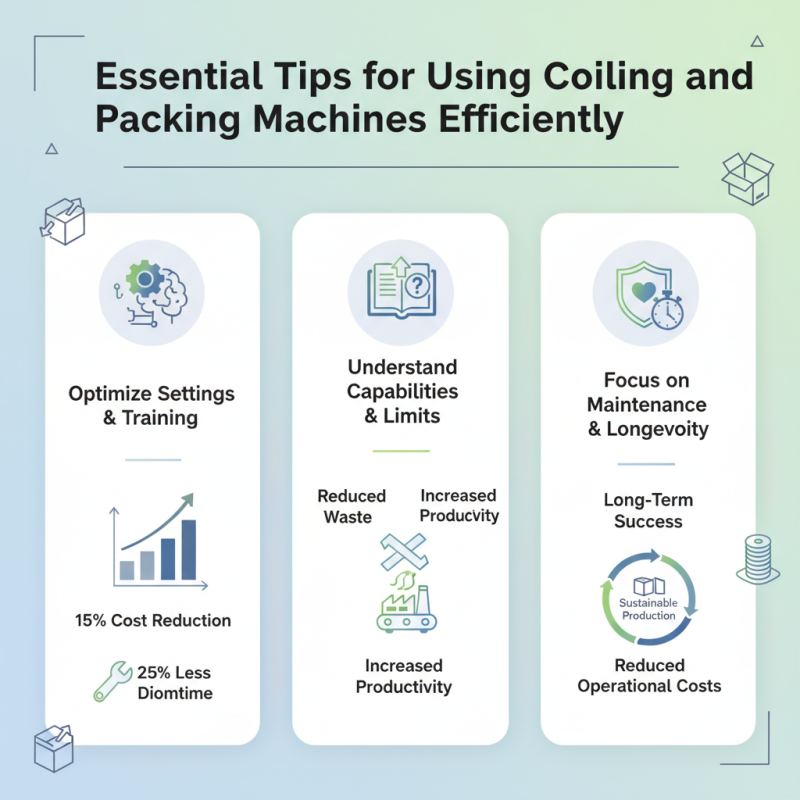
In today's manufacturing landscape, the efficiency of production processes is crucial. Coiling and Packing Machines play a significant role in this efficiency. According to a report by Smithers Pira, companies can reduce packaging costs by 15% with optimized machinery. However, many facilities still underutilize these machines.

The design of the coiling and packing machines allows for rapid operation and precision. It's essential to harness their full potential. A study by the Association for Packaging and Processing Technologies shows that 25% of businesses experience downtime due to improper machine settings. This outcome highlights the need for better training and a focus on maintenance.

Investing in coiling and packing technology is not enough. Companies must understand their machine’s capabilities and limits. For many, this proves challenging. A lack of knowledge can lead to increased waste and lower productivity. Thus, ensuring effective use of coiling and packing machines is critical for long-term success in any production environment.
Essential Tips for Using Coiling and Packing Machines Efficiently?

Understanding Coiling and Packing Machine Functions

Coiling and packing machines are vital in many industries. Understanding their functions enhances efficiency. These machines excel in organizing and packaging materials securely. For example, they can coil wires or wrap products tightly. This reduces space and keeps items in shape.

The coiling function involves rotating and winding materials. Operators should monitor tension while coiling. Too much tension can lead to damage. Conversely, too little may cause loose coils. Packing machines, on the other hand, seal and protect products. They often use various techniques like heat sealing or shrink wrapping.

Mistakes are common when setting up these machines. Some operators might overlook checking the alignment. A misaligned machine can result in uneven coiling or packing. Regular training is crucial. Team members should share experiences and challenges. This approach fosters improvement and ensures optimal performance.

Key Considerations for Selecting the Right Equipment

When selecting coiling and packing machines, consider various crucial factors. Start with the specific needs of your production line. Analyze the types of materials you will handle. For example, some machines perform better with flexible materials, while others excel with rigid options. This choice impacts overall efficiency.

Moreover, size and capacity are vital. A machine that is too small may lead to frequent jams. Meanwhile, oversized equipment might waste energy and space. Look for options that fit seamlessly into your setup. Don't overlook the technical support from manufacturers. Good support can resolve issues quickly and minimize downtime.

Maintenance requirements also need your attention. Some machines require more frequent upkeep. This can lead to higher operational costs. Inspect user reviews for insights on reliability and ease of repairs. Ultimately, finding a balance between efficiency and cost is tricky but necessary. Your choice must align with your long-term goals and production demands. Reflect on past experiences and adapt as needed.

Best Practices for Efficient Operation and Maintenance

Efficient operation and maintenance of coiling and packing machines are vital. Regular inspection should be part of your routine. Check for wear and tear on belts and rollers. Noticed any unusual noises? Investigate promptly. Ignoring odd sounds can lead to bigger issues later.

Training operators is essential. They need to understand machine settings, like speed and tension. A well-trained operator can spot problems early. This can help save time and money. Remember, even with training, mistakes might happen. Encourage a culture of reporting errors and learning from them.

Cleaning machines regularly is another best practice. Accumulation of dust and debris can affect performance. Take time to wipe down surfaces. Ensure that moving parts are clear. Consider implementing a cleaning schedule. But, be aware, maintaining cleanliness can be overlooked in busy environments. Revisiting this may help improve efficiency.

Common Challenges and Solutions in Machine Use

When using coiling and packing machines, operators often face several common challenges. One prevalent issue is the inconsistency in coil tension. Incorrect tension can lead to uneven packing and increased waste. Operators must regularly check the tension settings. A gauge can help identify fluctuations. Without this, coils may end up too tight or too loose. This complicates the packing process.

Another challenge is material alignment. Misalignment can cause jams or defective products. It's essential to ensure that materials are fed correctly into the machine. Sometimes, despite best efforts, there can still be issues. A simple visual inspection before starting can significantly reduce this risk. It’s a task often overlooked but crucial for smooth operation.

Lastly, operator training is vital. Many users may not feel confident in handling advanced features. Continuous training sessions can help mitigate this. Reflection on past challenges can drive improvement. It’s important to foster an environment where feedback is welcome. This ensures that everyone learns and grows from their experiences.

Essential Tips for Using Coiling and Packing Machines Efficiently

This bar chart illustrates common challenges faced while using coiling and packing machines and the effectiveness of various solutions implemented to overcome them.

Safety Guidelines for Using Coiling and Packing Machines

When working with coiling and packing machines, safety should be a top priority. According to a report by the Occupational Safety and Health Administration (OSHA), improper use of machinery is a leading cause of workplace injuries. A staggering 30% of these injuries can be attributed to machine operators who do not follow safety protocols. Therefore, it is essential to ensure that operators are trained adequately.

One critical safety guideline is to always wear appropriate personal protective equipment (PPE). This includes gloves, goggles, and safety shoes. Operators should also be aware of their surroundings. Machines can have blind spots, and a moment of inattention can lead to accidents. Basic awareness alone can prevent many incidents.

Tips: Regularly inspect machines for wear and tear. This can help identify potential hazards before they lead to problems. Additionally, ensure that emergency stops are easily accessible for swift action. Operators should not rush through tasks, as speeding can increase the risk of mistakes and injuries.

It’s worth reflecting on past incidents as learning opportunities. Every near-miss teaches valuable lessons that can improve safety protocols. Monitoring and reviewing these events can cultivate a culture of safety. After all, a safe workplace is a productive workplace.