
Top 10 Ground Rod Copper Products for Global Buyers?

In the ever-evolving world of electrical grounding, Ground Rod Copper remains a crucial material. Its effectiveness in providing reliable electrical grounding cannot be overstated. Businesses globally seek high-quality copper products for their grounding needs.

Selecting the right ground rod is essential for safety and performance. It's not just about quality; it's about understanding local standards and specific applications. Simple mistakes can lead to significant issues down the line. Buyers should consider factors such as corrosion resistance, conductivity, and mechanical strength.

This article explores the top 10 Ground Rod Copper products available today. Each product has been vetted for quality and reliability. We aim to provide insights that empower global buyers in their decision-making. Ground Rod Copper should be viewed not just as a product but as a key component in enhancing electrical safety and efficiency.
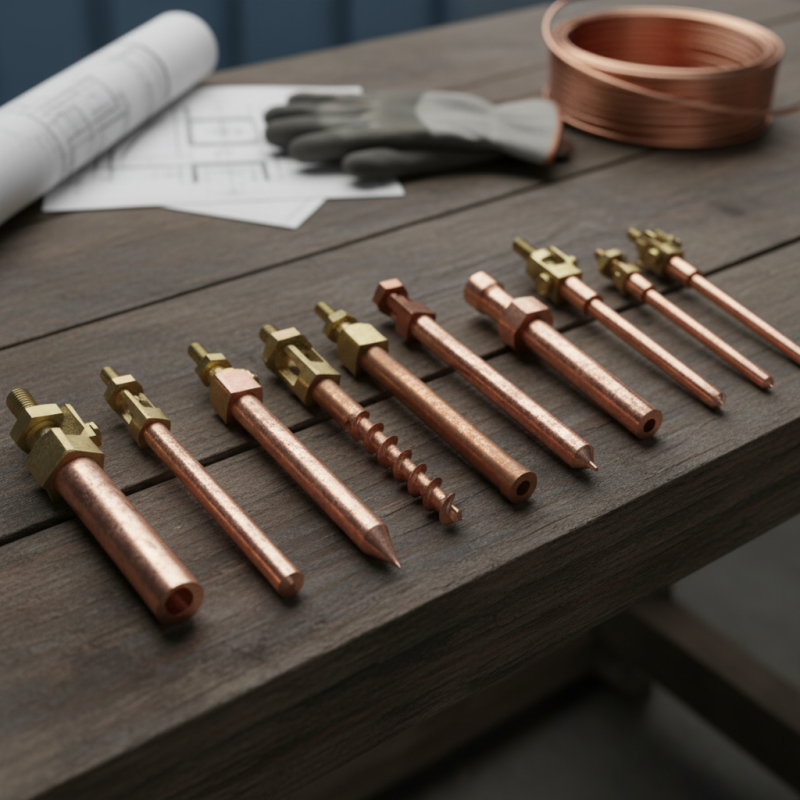
Top 10 Ground Rod Copper Products for Global Buyers?

Top 10 Copper Ground Rod Products: Market Overview and Trends

The copper ground rod market is experiencing significant growth. According to recent industry reports, the global demand for copper ground rods is expected to reach over $2 billion by 2025. This growth is driven by the increased focus on electrical safety and the expanding infrastructure sector.

Copper ground rods are vital for grounding electrical systems effectively. Companies investing in high-quality rods report lower failure rates and improved system reliability. A study indicated that the use of copper ground rods can reduce electrical incidents by nearly 30%. This statistic emphasizes the importance of selecting the right product for safety concerns.

Market trends show a shift towards eco-friendly manufacturing processes. Many manufacturers are adopting sustainable practices. However, there is still a gap in compliance among smaller companies. This inconsistency in quality raises questions about the reliability of certain products. Buyers should thoroughly evaluate suppliers to ensure they meet industry standards.

Key Specifications for Copper Ground Rods: Understanding Industry Standards

Understanding the specifications of copper ground rods is vital for global buyers in the electrical industry. Copper ground rods typically comply with ASTM B3 and ASTM B8 standards. These standards ensure the conductivity, durability, and resistance to corrosion of copper materials. According to industry reports, the average resistivity of copper ground rods stands at 1.68 micro-ohm-cm, contributing to effective grounding systems in various applications.

Common lengths for copper ground rods are 8 to 10 feet. This is important because the length directly affects the grounding resistance. A rod that is too short may not provide sufficient grounding, leading to safety issues. Additionally, the diameter is often 5/8 inch or 3/4 inch, which influences both mechanical strength and conductivity. According to a 2023 study, nearly 25% of grounding failures stem from choosing incorrectly sized rods.

The efficiency of a ground rod can also be impacted by soil resistivity. Many regions experience varying soil conditions, which necessitate adjustments to the grounding system. Buyers should consider local soil characteristics before making a purchase. Factors such as moisture levels and the presence of minerals can significantly affect performance. Reflecting on these specifications aids buyers in making informed decisions in an ever-evolving market.

Top 10 Ground Rod Copper Products for Global Buyers

Comparison of Copper Rod Manufacturers: Pricing and Quality Analysis

When evaluating copper rod manufacturers, understanding pricing and quality is critical for global buyers. Copper rod products vary significantly in cost due to factors like material purity and manufacturing processes. A 2022 industry report highlighted that high-purity copper rods command a premium, with prices ranging from $5 to $10 per kilogram depending on the market. In contrast, lower purity options can be found for less than $5 per kilogram. This price discrepancy often reflects the quality and longevity of the products.

Tips: Always verify the manufacturing standards before purchase. Research certifications and test results to ensure reliability.

Quality analysis also depends on the specific applications of copper rods. For electrical grounding, rods must meet certain conductivity standards. According to IEC 60228, copper wire must have a minimum conductivity of 97% IACS (International Annealed Copper Standard). Buyers can assess whether manufacturers comply by reviewing technical datasheets and customer testimonials.

Tips: Request sample products to evaluate performance before placing bulk orders. This can prevent costly mistakes and ensure you receive the best value for your investment.

Global Applications of Copper Ground Rods: Industries and Safety Compliance

Copper ground rods play a crucial role in various industries. They ensure electrical safety and efficient grounding in systems. According to industry reports, proper grounding minimizes electrical hazards in facilities. In commercial settings, grounding rods are vital for protecting equipment from surges.

The construction industry heavily relies on these ground rods. They help comply with safety standards like the National Electrical Code (NEC) in the United States. A study highlighted that almost 70% of electrical failures stem from poor grounding practices. This underscores the need for reliable products.

However, not all copper ground rods meet the performance required. Some may corrode quickly, leading to increased risk over time. Regular inspections are necessary, and many recommend testing ground resistance annually. Balancing cost and reliability is often a challenge for buyers.

Top 10 Ground Rod Copper Products for Global Buyers

Product Type Diameter (mm) Length (m) Weight (kg) Application Industry Safety Compliance
Copper Ground Rod 16 2.44 3.6 Telecommunications IEC 61024
Copper Bonded Ground Rod 19 3.05 4.5 Industrial NEMA 250
Solid Copper Ground Rod 22 2.13 5.0 Power Generation IEEE Std. 80
Copper Ground Rod with Inspection Hole 25 1.50 6.0 Construction ASTM B3
Extruded Copper Ground Rod 20 2.74 4.0 Railway ANSI C62.11
Copper Ground Rod with Tapered End 18 3.00 5.2 Electrical Utilities UL 467
Copper Grounding Electrode 29 4.00 6.5 Renewable Energy IEEE Std. 837
Copper Grounding Plate 30 2.00 8.0 Data Centers ISO 9001
Heavy Duty Copper Ground Rod 24 2.00 7.0 Mining OSHA
Copper Grounding Rod with Wire Connection 21 2.50 5.5 Telecom & Data NEC

Future of Copper Ground Rod Products: Innovations and Sustainability Challenges

The future of copper ground rod products holds significant promise. Innovations in materials and design aim to enhance efficiency and durability. For instance, new alloys may improve corrosion resistance. This is crucial, especially in challenging environments. Ground rods need to perform reliably over time.

Sustainability presents both opportunities and challenges. The extraction of copper has environmental implications. Companies are exploring ways to minimize their ecological footprint. Recycling of copper is becoming more prevalent. This process reduces the need for new raw materials. However, the infrastructure for recycling is not uniformly developed.

The industry faces pressures to innovate while maintaining ethical standards. Balancing cost, performance, and sustainability is complex. Moreover, as demand rises, industry leaders must commit to transparent practices. Ground rod products must evolve to meet these expectations. This journey requires collaboration among stakeholders. Emphasizing long-term benefits is vital for lasting progress.