
For over 50 years, we have dedicated ourselves to providing Industry with best in class wire management solutions and to helping solve mission critical issues.

The needs of today’s schools and universities are changing fast. When it comes to anticipating and meeting those needs, MonoSystems is in a class of its own.
For the past five decades, we’ve made it our business to offer more value to our partners, which in turn provides greater value to their customers.
Choosing the right Explosion Proof Box begins with understanding the hazard, not the product photograph. A box installed near solvent vapors may need different protection from one exposed to combustible dust. Temperature, pressure, corrosion, cable entry, and maintenance access also affect safe performance. Small details matter.
Industry data supports careful selection. MarketsandMarkets’ Explosion-Proof Equipment Market report identifies oil and gas, chemicals, pharmaceuticals, and mining as major demand sectors. Grand View Research also reports continued growth in explosion-proof equipment through 2030, driven by stricter industrial safety expectations and expanding hazardous-area applications. However, these reports use different definitions and forecasting methods. Their figures should guide research, not replace engineering judgment. That is an important limitation.
This guide examines ten Explosion Proof Box types for global buyers, including junction boxes, control stations, terminal enclosures, and stainless-steel options. Each type should be assessed against IEC 60079 requirements, relevant ATEX or IECEx certification, and local electrical codes. NEMA and IP ratings offer useful enclosure information, but they do not automatically prove explosion protection. A credible supplier should provide certificates, temperature-class data, material specifications, drawings, and traceable test records. Look closely.
In real projects, a box may sit beneath a chemical pipe, beside vibrating machinery, or inside a dusty processing room. Those conditions change the decision. No universal enclosure fits every site. Buyers should verify hazardous-zone classification with qualified professionals before ordering, because an attractive price cannot compensate for incorrect protection. Even experienced teams can overlook cable glands or grounding details. That risk deserves honest review.
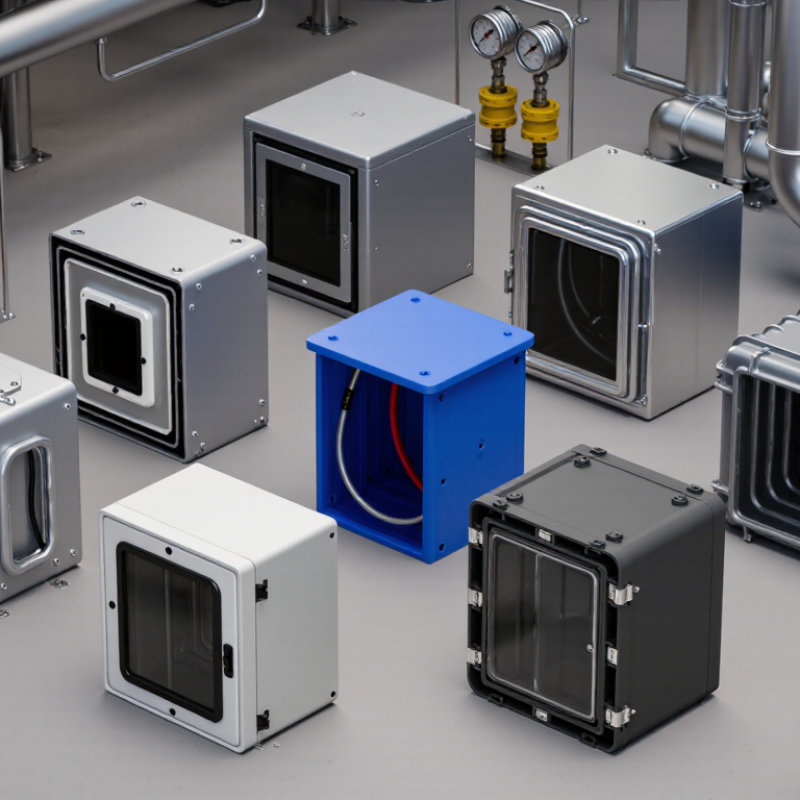
An explosion-proof box is not simply a thick metal cabinet. It is engineered to control ignition, pressure, heat, and flame paths. For global buyers, the first question is the hazard classification, not the box shape.
Gas hazards use Zones 0, 1, and 2 under IEC practice. Zone 0 means continuous or frequent explosive gas exposure. Zone 1 covers likely exposure during normal operation. Zone 2 covers abnormal, short-duration releases.
Dust areas use Zones 20, 21, and 22. North American systems often use Class I for gas, Class II for dust, and Class III for fibers. Division and group details still matter.
Common choices among the top ten types include junction, terminal, control, instrumentation, push-button, lighting, battery, camera, cable, and distribution boxes.
An Ex d enclosure contains an internal explosion through tested flame paths. Ex e focuses on increased safety, while Ex t protects against dust ignition. These labels are not interchangeable.
Temperature class matters too. A surface reaching 135°C may be unsafe near certain gases or dust clouds.
Real sites are less tidy than drawings. Condensation, damaged paint, and incorrect glands can defeat a compliant design.
Tips: Request the certificate, protection concept, gas or dust group, temperature class, IP rating, ambient range, and approved cable entries. Do not assume IP66 equals explosion protection. Check material compatibility near salt spray, solvents, and washdown areas. A stainless enclosure may resist corrosion, but its hinges and seals still need inspection. Installation records should be reviewed with the same care as the product certificate. Many purchasing errors begin with copied specifications, and that shortcut deserves more skepticism.
Global buyers need more than a rugged metal enclosure. MarketsandMarkets estimates the explosion-proof equipment market could grow from about USD 8.5 billion in 2023 to USD 11.2 billion by 2028. IEC 60079 remains a key reference for selecting equipment in gas and dust hazardous areas.
Ten core types serve different industrial tasks. Junction boxes divide power circuits in refineries and chemical plants. Terminal boxes organize field cable terminations. Control stations operate pumps locally. Push-button boxes manage motor start and stop commands. Instrumentation boxes protect transmitters and signal connections. Lighting boxes support hazardous-area fixtures. Pull-cord switch boxes provide conveyor emergency signaling. Disconnect boxes isolate equipment during maintenance. Motor control boxes protect local motor circuits. Analyzer boxes shield process measurement connections. Each type needs a suitable protection method, temperature rating, ingress rating, and certified installation method.
Tips: Match the enclosure to the actual gas group, dust class, ambient temperature, and zone classification. A flameproof design may not suit every application. Check cable glands, unused entries, grounding, and cover seals before commissioning. Buyers should also review IEC 60079 certificates and maintenance records, not only purchase price. In practice, specifications are sometimes incomplete. That weakness deserves attention. A box can look strong, yet fail through poor installation or incorrect cable sealing.
| No. | Explosion-Proof Box Type | Primary Protection Concept | Typical Enclosure Materials | Common Size Range | Typical Ingress Protection | Typical Industrial Applications | Common Hazardous-Area Use | Key Buyer Considerations | Relevant Standards |
|---|---|---|---|---|---|---|---|---|---|
| 1 | Explosion-Proof Junction Box | Flameproof enclosure containing and cooling an internal ignition. Usually selected where cable splicing, branching, or conductor termination is required. | Cast aluminium alloy, stainless steel, or cast iron | 150 × 150 × 100 mm to 600 × 400 × 250 mm | IP66IP67 | Oil and gas facilities, chemical plants, refineries, fuel terminals, and offshore platforms | Gas Groups IIA, IIB, or IIC; dust protection may be available in suitable certified versions | Check certified cable entries, internal volume, terminal capacity, temperature class, and enclosure thread type | IEC 60079-0, IEC 60079-1; local certification requirements |
| 2 | Explosion-Proof Terminal Box | Provides protected termination for incoming and outgoing cables using certified terminal blocks. It is designed to prevent ignition from reaching the surrounding atmosphere. | Aluminium alloy, stainless steel, or glass-reinforced polyester | 200 × 150 × 120 mm to 800 × 600 × 300 mm | IP65IP66 | Motor connections, heater circuits, lighting distribution, instrumentation, and process skids | Classified gas or dust areas, depending on the enclosure certification | Verify terminal voltage, current rating, creepage distance, conductor size, and allowable number of terminals | IEC 60079-0, IEC 60079-1, IEC 60079-7 |
| 3 | Explosion-Proof Control Station | A field-mounted enclosure containing switches, selector controls, pilot lights, emergency-stop devices, or other control components. | Painted aluminium alloy, stainless steel, or reinforced polyester | 180 × 120 × 100 mm to 500 × 400 × 250 mm | IP66IP67 | Conveyors, pumps, compressors, mixers, tank farms, and production machinery | Gas Zones 1 and 2 or dust Zones 21 and 22, subject to the complete assembly certificate | Review actuator layout, operating temperature, emergency-stop reset method, and control-circuit ratings | IEC 60079-0, IEC 60079-1, IEC 60079-7 |
| 4 | Explosion-Proof Push-Button Box | Compact flameproof operator station used for local start, stop, reset, jog, or emergency-stop functions. | Aluminium alloy, stainless steel, or impact-resistant polymer | 100 × 80 × 70 mm to 300 × 220 × 150 mm | IP65IP66 | Material handling, pumps, loading arms, process machinery, and packaged equipment | Gas or dust hazardous areas, depending on the marked protection method | Confirm button configuration, contact arrangement, mechanical endurance, cable-entry position, and emergency-stop compliance | IEC 60079-0, IEC 60079-1; IEC 60947-5-1 where applicable |
| 5 | Explosion-Proof Instrument Enclosure | Protects transmitters, signal conditioners, relays, displays, and small control instruments from hazardous atmospheres and environmental exposure. | Stainless steel, aluminium alloy, or reinforced polyester | 150 × 150 × 100 mm to 400 × 300 × 200 mm | IP65IP66 | Pressure, flow, temperature, level, and analytical measurement systems | Process plants, water-treatment chemical systems, tank farms, and gas-handling installations | Check heat dissipation, instrument mounting space, window material, cable glands, and signal isolation requirements | IEC 60079-0, IEC 60079-1, IEC 60079-11 for intrinsically safe equipment |
| 6 | Explosion-Proof Electrical Control Cabinet | Larger enclosure for motor-control equipment, relays, contactors, circuit protection, variable-speed drives, or automation components. | Fabricated stainless steel, painted carbon steel, or aluminium alloy | 600 × 500 × 250 mm to 2000 × 1200 × 600 mm | IP54IP65 | Motor control centers, compressor packages, pumping stations, and process automation | Typically used when the certified protection concept and heat-management design match the area classification | Evaluate heat generation, internal clearance, door weight, short-circuit rating, maintenance access, and lifting points | IEC 60079-0, IEC 60079-1, IEC 61439 where applicable |
| 7 | Explosion-Proof Distribution Box | Distributes power to several outgoing circuits through certified protective devices, terminals, or busbar arrangements. | Stainless steel, aluminium alloy, or coated steel | 300 × 250 × 150 mm to 1200 × 800 × 400 mm | IP65IP66 | Lighting circuits, heat tracing, utility power, small motors, and local plant distribution | Refineries, chemical processing areas, LNG facilities, and dust-generating production sites | Confirm rated current, fault level, protective-device coordination, cable-entry arrangement, and circuit segregation | IEC 60079-0, IEC 60079-1, IEC 61439 where applicable |
| 8 | Explosion-Proof Lighting Control Box | Houses switches, contactors, photocell controls, timers, or local isolators used to operate hazardous-area lighting systems. | Aluminium alloy, stainless steel, or reinforced polyester | 150 × 120 × 100 mm to 500 × 350 × 200 mm | IP66IP67 | Tank farms, loading bays, marine terminals, underground facilities, and process buildings | Gas Zones 1 and 2 or dust Zones 21 and 22, according to the selected certification | Check lighting load, switching frequency, inrush current, photocell compatibility, and emergency-lighting interface | IEC 60079-0, IEC 60079-1, IEC 60598-2-22 where applicable |
| 9 | Explosion-Proof Cable Pull and Splice Box | Provides a protected location for cable pulling, joining, and direction changes. It is different from a general-purpose weatherproof pull box because certification is required for hazardous areas. | Cast aluminium alloy, stainless steel, or coated cast iron | 200 × 150 × 120 mm to 1000 × 700 × 350 mm | IP66IP67 | Long cable runs, pipeline systems, offshore modules, conveyor routes, and process units | Hazardous gas or dust locations where cable joints or routing changes are permitted by the installation design | Verify bending radius, splice-kit compatibility, cable fill, internal volume, drainage provisions, and gland certification | IEC 60079-0, IEC 60079-1, IEC 60079-14 for installation practices |
| 10 | Intrinsically Safe Barrier and Interface Box | Limits electrical energy in instrumentation circuits so sparks or thermal effects cannot ignite the specified explosive atmosphere under defined fault conditions. | Stainless steel, aluminium alloy, or reinforced polyester | 200 × 150 × 100 mm to 800 × 600 × 250 mm | IP54IP65 | Process transmitters, sensors, weigh systems, flow measurement, and remote I/O interfaces | Commonly used for Zone 0, Zone 1, and Zone 2 instrumentation circuits when the complete loop is compatible | Check entity parameters, galvanic isolation, grounding, cable capacitance and inductance, segregation, and loop documentation | IEC 60079-0, IEC 60079-11, IEC 60079-25 |
The ten main protection families include flameproof, increased-safety, intrinsic-safety, pressurized, encapsulated, dust-tight, oil-immersed, powder-filled, non-sparking, and purgeable enclosures. Each controls ignition differently. Flameproof boxes contain internal explosions through strong walls and precision flame paths. Increased-safety designs reduce sparks, hot surfaces, and loose electrical connections. Intrinsic-safety systems limit circuit energy before ignition becomes possible. Pressurized boxes use clean air or inert gas to keep hazardous atmospheres outside.
Material selection changes field performance. Stainless steel resists corrosive washdown and salt exposure, while aluminum reduces weight and supports heat dissipation. Glass-reinforced polyester offers strong chemical resistance, but impact damage requires inspection. Reliable structures usually include threaded covers, certified cable glands, bonded hinges, grounding points, and carefully sized O-rings. IP66 protection helps exclude dust and powerful water jets, although the rating does not replace hazardous-area certification.
MarketsandMarkets’ 2024 explosion-proof equipment report projects market growth from approximately US$7.3 billion in 2024 to US$10.1 billion by 2029. That growth reflects wider industrial automation and stricter risk controls. However, buyers should not treat one enclosure as universally safe. IEC 60079 guidance, temperature class, gas group, dust group, ambient temperature, and installation method must match the site. A common mistake is choosing a thicker box while overlooking cable entry sealing. Real installations are rarely perfect. Even certified equipment can fail when damaged, poorly grounded, or modified without engineering review.
Top 10 Explosion Proof Box Types for Global Buyers?
Global certification begins with the hazard, not the enclosure shape. Common choices include flameproof, increased-safety, intrinsic-safety, pressurized, purged, encapsulated, dust-ignitionproof, non-sparking, oil-immersed, and special-protection boxes. IEC 60079 defines protection concepts, equipment groups, temperature classes, and equipment protection levels. IECEx certification supports international trade, but it does not automatically satisfy every local authority.
European buyers usually check ATEX Directive 2014/34/EU, zone classification, and essential health requirements. North American projects often require NEC and NFPA 70 classifications, including Class I, II, or III locations. Australia and several Asian markets commonly reference AS/NZS or IEC 60079 requirements. Local certificates may still be necessary. A certificate can be valid and still be the wrong answer.
NFPA’s Structure Fires in Industrial and Manufacturing Properties report recorded an annual average of 37,910 fires from 2017 to 2021. These incidents caused approximately 16 civilian deaths, 273 injuries, and 1.3 billion dollars in direct property damage each year. Buyers should verify gas or dust group, temperature rating, cable glands, IP rating, ambient temperature, and installation method. Small details matter. Field experience shows that cable entry errors remain common, even on carefully specified projects. Product selection should therefore include certificate schedules, marking plates, installation drawings, and local inspection requirements. Availability is useful, but compliance comes first.
Top 10 Explosion Proof Box Types for Global Buyers
Global buyers compare explosion-proof boxes by protection method, installation zone, materials, and certification documents. Common options include flameproof, increased-safety, pressurized, intrinsic-safety, and dust-protected boxes. Enclosures also vary by material, including stainless steel, aluminum, glass-reinforced plastic, and polycarbonate.
The best choice depends on the hazard, not appearance. Buyers should verify gas or dust classification, temperature class, ingress protection, cable-entry size, and terminal capacity. A compact box may look efficient, yet limited wiring space can slow installation. Check drawings carefully.
Specification sheets should identify operating temperature, impact resistance, grounding points, sealing methods, and inspection requirements. Certificates must match the intended market and equipment application. Requirements differ across regions, so generic approval language deserves careful questioning. Ask for test reports, dimensional drawings, packing details, and traceable quality records.
Sourcing teams also compare lead times, spare parts, export packaging, and technical support. A lower unit price may hide costly cable glands or custom modifications. Delivery matters. Some buyers overlook corrosion near coastal sites or dust buildup in agricultural facilities. That mistake can affect service life.
The top ten ranking is imperfect. Project conditions change it. A terminal box may suit one site, while a pressurized enclosure fits another. Buyers should invite suppliers to review the complete installation environment before confirming the purchase.
Typical ingress-protection ratings commonly referenced when buyers compare enclosure types for hazardous-area projects worldwide.
Flameproof, increased-safety, dust-protected, and hybrid enclosures are frequently specified with IP65 or IP66 protection, while pressurized and intrinsically safe systems may use lower enclosure ratings depending on the installation design. IP ratings describe protection against solids and water under IEC 60529; they do not replace hazardous-area certification such as ATEX, IECEx, or applicable local approvals.