
For over 50 years, we have dedicated ourselves to providing Industry with best in class wire management solutions and to helping solve mission critical issues.

The needs of today’s schools and universities are changing fast. When it comes to anticipating and meeting those needs, MonoSystems is in a class of its own.

For the past five decades, we’ve made it our business to offer more value to our partners, which in turn provides greater value to their customers.
Choosing a Portable Gas Detector manufacturer in China is not just a price comparison. In a plant, a useful instrument must detect the gases workers face, show clear readings, and sound an alarm reliably. Battery life, sensor replacement, calibration access, and local technical support also matter. Small details matter.
The International Labour Organization’s 2023 report, A Call for Safer and Healthier Working Environments, estimates 2.93 million work-related deaths and 395 million non-fatal work-related injuries worldwide each year. These figures describe a broad workplace-safety challenge, not gas incidents alone. They underline why buyers should verify performance claims and service arrangements rather than rely on catalog language. Market studies, including Grand View Research’s Gas Detection Equipment Market report, also track demand across industrial applications. Market growth, however, does not prove that any particular detector suits a specific site.
This guide introduces Chinese manufacturers and the factors buyers can check before requesting a quotation. Compare detection ranges, sensor technologies, alarm settings, ingress protection, and calibration procedures. Ask for model-specific documentation, test records, warranty terms, and examples of after-sales support. A brochure may look convincing. Not on paper. Confirm whether the instrument fits the actual work: a technician carrying it through a dusty workshop needs different practical assurances from a fixed monitoring setup. Manufacturer claims should be independently checked against the intended use and relevant technical requirements. The comparison is not perfect; product lines change, and public information can be uneven. That is worth remembering.
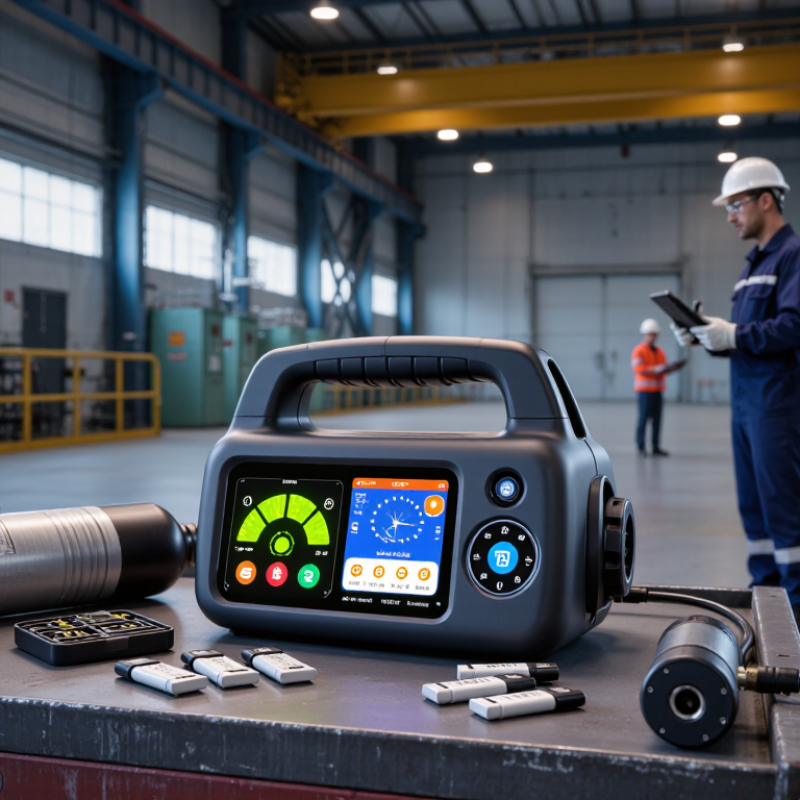
Portable gas detectors measure oxygen, toxic gases, combustible gases, or volatile organic compounds, depending on their sensors. A worker may clip one to a belt while entering a maintenance area. Its display shows a live concentration, often in parts per million, percent by volume, or percent of the lower explosive limit. Small details matter.
Different sensors detect gases in different ways. Electrochemical cells produce an electrical signal when a target gas reacts inside the sensor. Catalytic-bead sensors measure heat changes caused by combustible gas oxidation. Infrared sensors detect how gas absorbs specific wavelengths of light. Photoionization detectors respond to many volatile organic compounds, but they do not identify every compound individually. A detector’s range and sensor type determine what its readings mean.
Gas reaches the sensor by diffusion through an inlet or through a pump that draws in a sample. Alarms sound or vibrate when readings cross set thresholds. Yet a display is not a guarantee. Humidity, sensor age, blocked inlets, and cross-sensitivity can affect results. A bump test checks whether gas triggers the alarms; calibration checks the reading against a known reference. These checks can be overlooked during busy shifts. No instrument is perfect, and understanding its limits is part of using it well.
Assessing portable gas detector manufacturers in China starts with the instrument, not the catalog. Ask which gases each model detects and what sensor range it uses. Request test records showing accuracy, response time, and alarm performance. A clear calibration procedure matters. So does a readable display under dim lighting. Small details matter.
Check how the manufacturer controls quality across production. Ask whether each unit is tested before shipment and whether test results can be traced to its serial number. Review the sensor replacement process, expected service intervals, and availability of technical support. If possible, handle a sample and inspect its buttons, clips, charging port, and alarm signals. These details can reveal gaps that a polished brochure may hide.
A capable supplier should answer technical questions plainly and provide manuals, maintenance instructions, and relevant test documentation. Compare support response times and confirm how faults are diagnosed. Price still matters, but a low quote is hard to judge without sensor life and service costs. I would not treat one successful sample as proof of consistent production; that assumption deserves a second look. Manufacturers that explain limitations as openly as features are easier to assess with confidence.
Use this evidence-based scorecard to compare manufacturers. It is an evaluation framework, not a ranking of specific companies. Confirm that each certificate and test report applies to the exact detector model, gas configuration, and intended use.
| Assessment dimension | Weight | Evidence to request and check | What a strong assessment looks like |
|---|---|---|---|
| Applicable certifications and standards | 15% | Model-specific certificates and full reports for the destination market. For example, check relevant IEC 60079 requirements for explosive-atmosphere equipment and IEC 62990-1 for applicable toxic-gas detector performance requirements. | Certificate scope, model number, gas type, protection concept, and issuing body can be independently verified and match the offered configuration. Confirm the applicable standard and edition for the intended use. |
| Measurement performance | 15% | Test reports and datasheets stating measuring range, resolution, accuracy, response time, alarm settings, and stated operating conditions for each sensor. | Performance claims are clearly defined and supported by test evidence for the exact sensor and gas. Cross-sensitivity, environmental limits, and measurement units are disclosed. |
| Gas and sensor coverage | 12% | A model-by-model list of detectable gases, sensor technologies, measuring ranges, and available single-gas or multi-gas configurations. | The manufacturer distinguishes sensor types and gas-specific limitations rather than presenting one specification as suitable for every gas or application. |
| Calibration and traceability | 12% | Calibration procedure, recommended calibration interval, calibration-gas requirements, certificate examples, and information on the traceability of calibration measurements. | Instructions identify gas concentration, calibration method, acceptance criteria, and required equipment. Any laboratory accreditation claim can be checked against the relevant laboratory and scope. |
| Explosion protection and ingress protection | 10% | Markings and certificates for the intended hazardous area, plus the IP rating and supporting test information where relevant. IEC 60529 is the reference standard for IP classification. | Protection markings are consistent across the product, certificate, and manual. The stated rating and permitted operating conditions suit the intended environment. |
| Environmental suitability | 10% | Specified operating and storage temperature, humidity limits, and any documented tests for vibration, impact, or other application-specific conditions. | Limits are stated in the technical documentation and supported by relevant test evidence; the supplier explains any effect of environmental conditions on readings or battery life. |
| Battery and practical operation | 8% | Battery type, charging requirements, stated runtime, charging time, alarm indications, data functions, and the conditions used for any runtime claim. | Runtime claims include test conditions and configuration. Controls, alarms, display, and routine checks are described clearly in the user documentation. |
| Manufacturing and quality controls | 8% | Quality-management certificates, inspection and functional-test procedures, serial-number traceability, and records for the supplied unit or production batch. | Certificates are valid and within scope; documented controls cover incoming components, assembly, final testing, and handling of nonconforming products. |
| After-sales support and serviceability | 5% | Written warranty terms, service locations, repair and calibration options, spare-parts availability, and response arrangements for the buyer’s market. | Support commitments are specific and documented; replacement sensors and routine service can be obtained through a clearly defined process. |
| Technical documentation and configuration control | 5% | Current datasheets, manuals, declarations, certificate schedules, revision history, and written confirmation of the supplied model and sensor configuration. | Documents are consistent, revision-controlled, understandable to the end user, and clearly linked to the exact product being quoted. |
| Total evaluation weight | 100% | Use the same evidence requirements and scoring method for every supplier to make the comparison consistent. | |
Suggested scoring: Rate each dimension from 0 to 5 (0 = no evidence; 1 = weak or incomplete; 3 = adequate documented evidence; 5 = strong, independently verifiable evidence). Calculate the weighted total as: score ÷ 5 × dimension weight, then add the results. Treat certification, gas suitability, and hazardous-area requirements as pass/fail checks whenever they are mandatory for the application.
China’s portable gas detector sector includes manufacturers focused on single-gas alarms, multi-gas instruments, and industrial monitoring systems. Many supply compact units for confined-space checks, maintenance rounds, and emergency response. Common configurations measure oxygen, combustible gases, or toxic gases, while some higher-specification models add photoionization detection for volatile compounds.
Chinese suppliers often specialize in particular design or production strengths. Some focus on electrochemical sensor integration and clear audible, visual, and vibration alarms. Others build rugged housings, replaceable sensor modules, or data-logging tools for fleet use. Small details matter: glove-friendly buttons, a readable screen under harsh lighting, and a charging dock suited to a busy workshop. Calibration can still interrupt work.
Procurement teams should compare more than quoted sensitivity. Ask for cross-sensitivity data, response-time results, calibration procedures, battery runtime during alarms, and sample inspection records. Verify documentation for the exact model and its intended market. Good suppliers explain limitations plainly. That helps. In practice, performance can vary between batches, and published figures may come from controlled tests rather than dusty, humid job sites. Request a demonstration using the gases and workflow your team actually needs.
Portable detector product lines commonly cover toxic gases such as hydrogen sulfide, carbon monoxide, ammonia, chlorine, and sulfur dioxide. Bars show NIOSH Immediately Dangerous to Life or Health (IDLH) concentrations in ppm; these benchmarks are not detector alarm settings. The logarithmic scale helps compare values across a wide range.
Source: NIOSH Pocket Guide to Chemical Hazards.
Portable gas detectors rely on sensors that match specific hazards and working conditions. Electrochemical sensors detect gases such as carbon monoxide, while catalytic-bead sensors measure combustible gases. Infrared sensors can suit some flammable-gas applications, and photoionization detectors can identify many volatile organic compounds. Each technology has limits. Humidity, temperature, cross-sensitivity, and sensor aging can affect readings, so buyers should request test data and operating ranges.
Tips: Ask for calibration records, alarm-response results, and a sample inspection report. Compare the stated detection range with the gases and concentrations your team expects. Small details matter. Check how easily staff can replace filters or charge the unit.
Certifications should fit the intended market and worksite. For hazardous locations, verify relevant explosion-protection approvals, such as IECEx or ATEX where applicable, rather than relying on a certificate logo alone. Ask for the certificate number and confirm its scope with the issuing body. Quality checks should also cover calibration, alarm function, battery endurance, enclosure protection, and production traceability. ISO 9001 may indicate a quality-management system, but it does not certify detector performance by itself. I would also review service support and spare-part availability; these are easy to overlook, yet they matter after purchase.
When comparing portable gas detector manufacturers in China, start with the hazards at your worksite, not a catalogue. A refinery, wastewater plant, and battery room may need different sensor combinations and alarm settings. The International Labour Organization’s 2023 global estimates report nearly 2.93 million work-related deaths annually. That figure is not specific to gas exposure, but it underscores why dependable detection and practical after-sales support matter. Ask manufacturers for calibration records, sensor-life data, and documented checks against your target gases. Small details matter.
Assess the unit under real operating conditions. Request sample testing in the temperatures, humidity, and vibration your workers will face. Check whether the display is readable in poor light, alarms are clear near machinery, and batteries last through a full shift. Ask how quickly replacement sensors and repairs can be supplied. A low purchase price can become costly if service takes weeks. I would not rely on a brochure alone; independent testing and a factory quality audit provide stronger evidence.
Tips: Give shortlisted suppliers the same written specification, including gases, range, response time, operating conditions, and service expectations. Compare test results, not just promises. Keep one awkward question in the review: what happens when a detector fails during a busy shift?