
For over 50 years, we have dedicated ourselves to providing Industry with best in class wire management solutions and to helping solve mission critical issues.

The needs of today’s schools and universities are changing fast. When it comes to anticipating and meeting those needs, MonoSystems is in a class of its own.

For the past five decades, we’ve made it our business to offer more value to our partners, which in turn provides greater value to their customers.
The Smart Lectern has moved beyond a wooden stand with a microphone. It now combines touch control, display technology, wireless presentation, camera integration, and network management. In universities, conference centers, government rooms, and corporate training spaces, one lectern may control an entire meeting environment.
AVIXA’s 2024 Industry Outlook and Trends Analysis forecasts continued growth in professional audiovisual spending through 2028. That growth matters to buyers. It signals stronger demand for integrated systems, but it does not guarantee better products. A bright screen cannot compensate for poor cable access, weak software support, or difficult maintenance. Small details matter.
Mark Weiser, the late Xerox PARC chief scientist and a pioneer of ubiquitous computing, wrote, “The most profound technologies are those that disappear.” His idea remains useful here. The best Smart Lectern should feel simple during a live presentation, even when it manages several complex functions behind the panel.
This guide examines the Top 10 Smart Lectern Manufacturers for Global Buyers. It considers product architecture, control interfaces, audio performance, connectivity, customization, service capability, and long-term reliability. It also considers practical experience: Can a presenter adjust the display without leaving the podium? Can technicians replace a module quickly? Can overseas buyers obtain compatible parts?
No ranking is perfect. Regional pricing, installation standards, and software ecosystems can change the result. Still, these manufacturers deserve close attention for their engineering depth, market presence, and ability to support demanding professional environments.
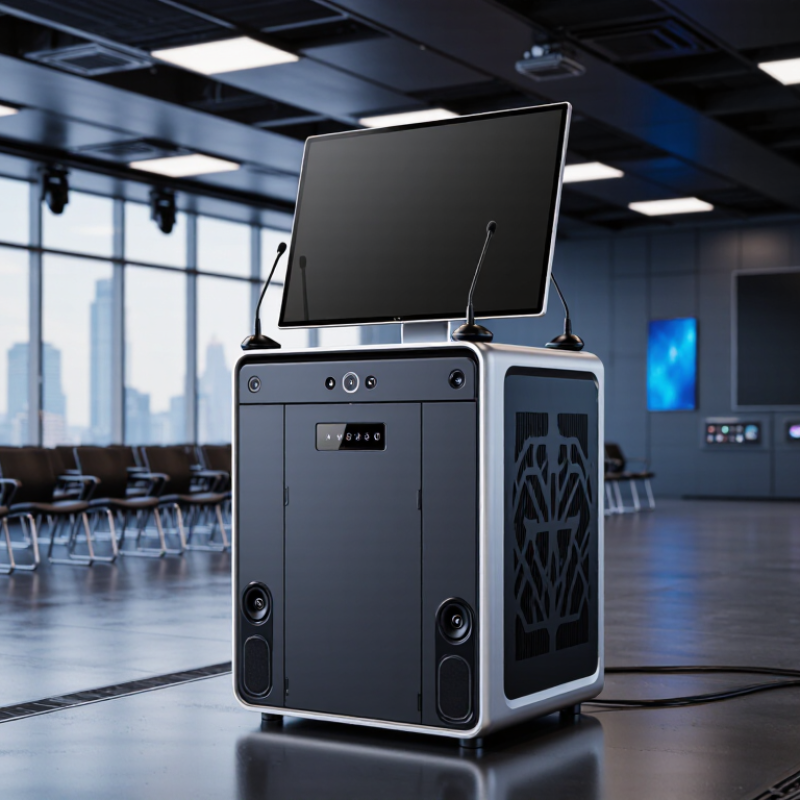
A smart lectern combines presentation furniture with integrated digital controls. In practical evaluations, the strongest models place a touchscreen, computer, microphone, and display connections within easy reach. The speaker should not bend awkwardly or search behind panels. Clear cable routing matters. Loose wires quickly turn a polished teaching space into a maintenance problem.
Core features usually include a height-adjustable work surface, built-in audio, camera support, and reliable network access. A responsive control panel can manage lighting, volume, source selection, and screen sharing from one position. Good ventilation protects internal equipment during long lectures. Lockable compartments also help secure devices and reduce accidental damage. Accessibility deserves equal attention, including suitable reach ranges and readable interface controls.
Global buyers should examine construction quality, service documentation, warranty terms, and replacement-part availability. These details often reveal more than a product demonstration.
During testing, technicians should check startup time, microphone clarity, heat buildup, and recovery after a network interruption. A lectern may look advanced yet offer poor usability. That happens.
Security settings should support responsible access management without creating unnecessary barriers for educators. Modular components can simplify future upgrades, but proprietary parts may increase long-term costs. This is where careful comparison becomes essential. No design fits every classroom, auditorium, or training room. A reflective buyer should question whether each feature solves a real operating need, rather than rewarding technology for its own sake.
When evaluating smart lectern manufacturers for global procurement, begin with engineering evidence, not attractive product images. Request a working sample with microphone control, display sharing, camera integration, and network management enabled. Test it in a real classroom, where lighting, cable access, and background noise expose weak design choices.
Ask for measurable specifications, including screen brightness, touch accuracy, operating temperature, power consumption, and service life. Demand evidence. A capable manufacturer should provide test reports, quality procedures, material details, and clear production capacity. Review certifications relevant to your destination markets, along with electrical safety, electromagnetic compatibility, privacy, and cybersecurity practices. Vague answers create future costs.
Supplier reliability also depends on communication after purchase. Examine warranty terms, spare-part availability, remote diagnostics, installation guidance, and response times across different time zones. Request references from institutions with similar room sizes and purchasing volumes. Compare total ownership cost, including shipping, local installation, software updates, training, and replacement components. Test the details. A polished demonstration can still hide difficult maintenance. I would also challenge unusually low quotations; they may reflect simplified hardware or incomplete support. Yet expensive equipment is not automatically better. Some evaluation mistakes come from overvaluing features that teachers rarely use. A small pilot across two room types can reveal more than a lengthy presentation. Feedback should include instructors, technicians, accessibility staff, and procurement officers before a long-term agreement is approved.
How to Evaluate Smart Lectern Manufacturers for Global Procurement
This procurement framework assigns practical evaluation weights to the main factors global buyers should review when comparing smart lectern manufacturers. Product quality, technology integration, international compliance, total cost, delivery capability, and after-sales support are assessed together rather than relying on price alone.
Smart lectern selection depends on practical strengths, not polished brochures. The leading ten manufacturers usually serve different professional needs. One excels in integrated AV control. Another focuses on bright touchscreens for large classrooms. A third builds height-adjustable lecterns for accessible teaching spaces. These differences matter during daily use.
Several manufacturers specialize in clear speech. Their lecterns combine gooseneck microphones, acoustic treatment, and feedback control. Others provide reliable video conferencing, dual-camera support, and simple wireless sharing.
Mobile lectern makers add lockable wheels and reinforced frames for changing rooms. Some manufacturers offer modular designs, allowing buyers to replace displays without rebuilding the cabinet. That saves maintenance time.
Small details reveal product strength. Look for cable channels that prevent sharp bends. Check whether the control panel remains usable under bright lighting. A durable powder-coated surface handles frequent cleaning better than fragile decorative finishes. Manufacturers serving government or education markets often provide documentation, training, and spare-part access. That improves reliability beyond the initial purchase. Custom fabrication specialists can match room dimensions, branding requirements, and local power standards. However, customization may increase lead time and repair complexity. The strongest value-focused manufacturers balance cost with ventilation, warranty coverage, and long-term service. Not every attractive lectern performs quietly. A live room trial remains worthwhile.
For global buyers comparing the top ten smart lectern manufacturers, feature claims need practical testing. A useful lectern should support HDMI, USB-C, wireless presentation, microphone mixing, and screen sharing without confusing menus. Touch displays, cable management, height adjustment, and accessibility controls also matter in daily teaching. AVIXA’s 2024 Industry Outlook valued the global professional audiovisual market at about US$306.4 billion in 2023, showing the scale of this purchasing environment. However, a large market does not guarantee dependable classroom hardware.
Pricing varies sharply. Basic electronic lecterns often fall near US$800–2,000, while integrated models with displays, amplifiers, cameras, and control systems can exceed US$3,000–10,000. Public quotations differ by region and installation scope. That weakness matters. Buyers should request an itemized quotation, firmware policy, spare-part pricing, and a written service-level agreement. Certifications deserve equal attention. Check applicable evidence for CE, FCC, RoHS, and IEC 62368-1 or equivalent safety testing. ISO 9001 certification can support process confidence, but it does not prove product quality.
Support is frequently underestimated. A strong supplier offers remote diagnostics, multilingual manuals, local technicians, replacement parts, and defined response times. UNESCO’s 2023 Global Education Monitoring Report notes that one in four primary schools lacks electricity, so power requirements and backup options deserve careful review. My scoring method is not perfect; hands-on demonstrations can still hide long-term maintenance problems. Test microphone pickup from the rear row, restart speed, heat buildup, and cable replacement before selecting a manufacturer.
| Rank | Anonymous Supplier | Typical Product Positioning | Display Configuration | Camera & Audio | Connectivity & Control | Operating System | Common Compliance Documentation | Indicative Unit Price | Warranty | Global Support Services | Overall Score |
|---|---|---|---|---|---|---|---|---|---|---|---|
| 1 | Supplier 01 | Premium education and conference lecterns | 21.5-inch full-HD capacitive touchscreen; adjustable viewing angle | 1080p tracking camera; dual microphones; integrated 20 W speakers | HDMI, USB-A, USB-C, LAN, Wi-Fi 6; centralized device management | Windows 11 IoT or Android 13 | CE, FCC, RoHS; ISO 9001 manufacturing system | US$2,400–3,600 | 24 months | Remote diagnostics, installation guides, firmware updates, regional service partners | 9.2/10 |
| 2 | Supplier 02 | Interactive classroom and hybrid-learning systems | 19-inch full-HD touchscreen; optional secondary confidence monitor | 1080p fixed camera; microphone array; 2 × 15 W speakers | HDMI in/out, USB 3.0, LAN, Wi-Fi 5, Bluetooth; touch control panel | Windows 11 Pro or Android 12 | CE, FCC, UKCA, RoHS; EMC test reports available | US$1,900–3,100 | 24 months | Email and video support, spare-parts program, online documentation | 9.0/10 |
| 3 | Supplier 03 | Broadcast-ready presentation and government AV furniture | 21.5-inch full-HD touchscreen; motorized height adjustment option | PTZ camera option; beamforming microphones; 40 W amplified audio | HDMI, SDI option, USB-C, dual LAN, Wi-Fi 6; AV-over-IP option | Windows 11 IoT | CE, FCC, UKCA, RoHS, WEEE; ISO 14001 option | US$3,200–5,400 | 24–36 months | Pre-sales system design, commissioning assistance, SLA-based support | 8.9/10 |
| 4 | Supplier 04 | Cost-efficient corporate meeting and training rooms | 15.6-inch or 18.5-inch full-HD touchscreen | 1080p camera; four-microphone array; 2 × 10 W speakers | HDMI, USB-A, USB-C, LAN, Wi-Fi 5; wireless presentation support | Android 13 or Windows 11 | CE, FCC, RoHS; regional safety documentation | US$1,250–2,200 | 12–24 months | Standard remote support, replacement-part availability, user manuals | 8.6/10 |
| 5 | Supplier 05 | Modular lecterns for universities and training centers | 21.5-inch full-HD touchscreen; modular rack and cable-management design | Optional 4K camera; detachable microphone; 30 W speakers | HDMI, DisplayPort, USB, LAN, Wi-Fi 6; programmable control interface | Windows 11 Pro | CE, FCC, RoHS, REACH; ISO 9001 available | US$2,100–3,800 | 24 months | Custom integration, technical drawings, remote commissioning, training materials | 8.5/10 |
| 6 | Supplier 06 | Portable and compact smart lecterns | 15.6-inch full-HD touchscreen; lockable caster base | 1080p camera; integrated microphone; 20 W speakers | HDMI, USB-A, USB-C, LAN, Wi-Fi 5; wireless casting option | Android 12 or Windows 11 IoT | CE, FCC, RoHS, UKCA; battery documentation where applicable | US$950–1,750 | 12–24 months | Online troubleshooting, video tutorials, standard replacement parts | 8.3/10 |
| 7 | Supplier 07 | Large-project procurement and OEM customization | 18.5-inch or 21.5-inch full-HD display; custom fascia and finishes | 1080p camera option; microphone array; 30 W speakers | HDMI, USB, LAN, Wi-Fi 6; API and room-control integration options | Windows 11 IoT or Android 13 | CE, FCC, RoHS, UKCA; factory quality inspection reports | US$1,600–3,000 | 24 months | OEM engineering, private labeling, bulk production support, inspection service | 8.2/10 |
| 8 | Supplier 08 | Budget-focused digital podiums for schools and public venues | 15.6-inch full-HD touchscreen; fixed-height cabinet | 1080p camera option; gooseneck microphone; 2 × 10 W speakers | HDMI, USB-A, LAN, Wi-Fi 5; basic touch control | Android 11 or Windows 10 IoT | CE, FCC, RoHS; basic EMC and electrical safety reports | US$780–1,450 | 12 months | Business-hours email support, installation instructions, paid extended warranty | 7.9/10 |
| 9 | Supplier 09 | High-volume commercial and institutional installations | 18.5-inch full-HD touchscreen; reinforced steel enclosure | 1080p camera; four-microphone array; 30 W speakers | HDMI, USB 3.0, LAN, Wi-Fi 6; centralized configuration tools | Windows 11 IoT | CE, FCC, RoHS, UKCA; ISO 9001 certificate available | US$1,450–2,650 | 24 months | Project scheduling, batch testing, on-site partner network, spare-parts support | 7.8/10 |
| 10 | Supplier 10 | Custom furniture-integrated lecterns for global tenders | 21.5-inch full-HD touchscreen; custom wood, laminate, or metal finish | Camera and microphone options; 40 W audio system available | HDMI, USB-C, USB-A, LAN, Wi-Fi 6; third-party control integration | Windows 11 Pro or Android 13 | CE, FCC, RoHS, REACH; project-specific compliance package | US$2,000–4,200 | 24 months | Design consultation, shop drawings, installation coordination, export documentation | 7.7/10 |
| Evaluation basis: display usability, integrated AV capability, connectivity, compliance documentation, indicative cost, warranty coverage, customization, and international support. Buyers should verify current specifications, certificates, lead times, Incoterms, and service-level commitments before purchase. | |||||||||||
Selecting a smart lectern supplier requires more than comparing touchscreen sizes. Global buyers should verify manufacturing experience, export records, and published technical specifications. Ask for a live demonstration, not only polished photographs. Check microphone pickup, screen brightness, cable routing, and stability at standing height. A reliable supplier explains limitations clearly. That matters. Request installation drawings, user manuals, and test reports before signing a purchase agreement.
Technical fit should match the venue. Confirm operating systems, wireless protocols, ports, camera compatibility, and network requirements. For schools, inspect accessibility features and simple controls for different age groups. For conference rooms, test echo cancellation and presentation switching under realistic conditions. Ask whether software updates remain available after installation. Electrical safety and data protection requirements also vary by destination market. The supplier should provide relevant compliance documents, not vague assurances.
Commercial reliability deserves equal attention. Compare warranty coverage, spare-part availability, technician response times, and training options. Request references from buyers with similar room sizes and usage patterns. Calculate landed cost, including packaging, shipping, customs, installation, and future maintenance. A low quotation can hide expensive service gaps. Even a careful scorecard can miss real-world weaknesses, so test one sample for several weeks when possible. A polished proposal is not proof of dependable performance. Mood, noise, and daily handling reveal more.