For over 50 years, we have dedicated ourselves to providing Industry with best in class wire management solutions and to helping solve mission critical issues.

The needs of today’s schools and universities are changing fast. When it comes to anticipating and meeting those needs, MonoSystems is in a class of its own.

For the past five decades, we’ve made it our business to offer more value to our partners, which in turn provides greater value to their customers.
Choosing among the top mesh cable tray manufacturers requires more than comparing catalog prices. A reliable supplier should demonstrate practical experience with data centers, factories, commercial buildings, and outdoor installations. Their mesh cable tray systems should offer consistent wire spacing, smooth edges, secure couplers, and clear load ratings. These details affect installation speed and long-term cable protection.
Manufacturer credibility also depends on verifiable quality practices. Look for documented testing, traceable materials, corrosion-resistant finishes, and compliance with relevant regional standards. Galvanized steel may suit humid plant rooms, while stainless steel can perform better in corrosive environments. Powder coating adds color and protection, but its durability depends on preparation and exposure conditions. Experienced manufacturers should explain these differences without hiding behind broad marketing claims.
There is no universal “best” manufacturer. A brand that excels in modular data-center systems may not suit heavy industrial cable routes. Buyers should examine product drawings, installation manuals, warranty terms, and independent project references. Ask whether the supplier tests couplers, bends, and load performance as complete assemblies. Small omissions matter. A tray can look strong on a showroom floor yet frustrate installers when field cuts expose sharp edges.
This guide compares leading mesh cable tray manufacturers through product quality, engineering support, production capability, customization, delivery reliability, and customer feedback. Some rankings remain subjective because public data is incomplete. That limitation deserves attention. Real performance may depend on local installers, environmental conditions, and maintenance practices. The strongest manufacturers provide evidence, not just confident promises.
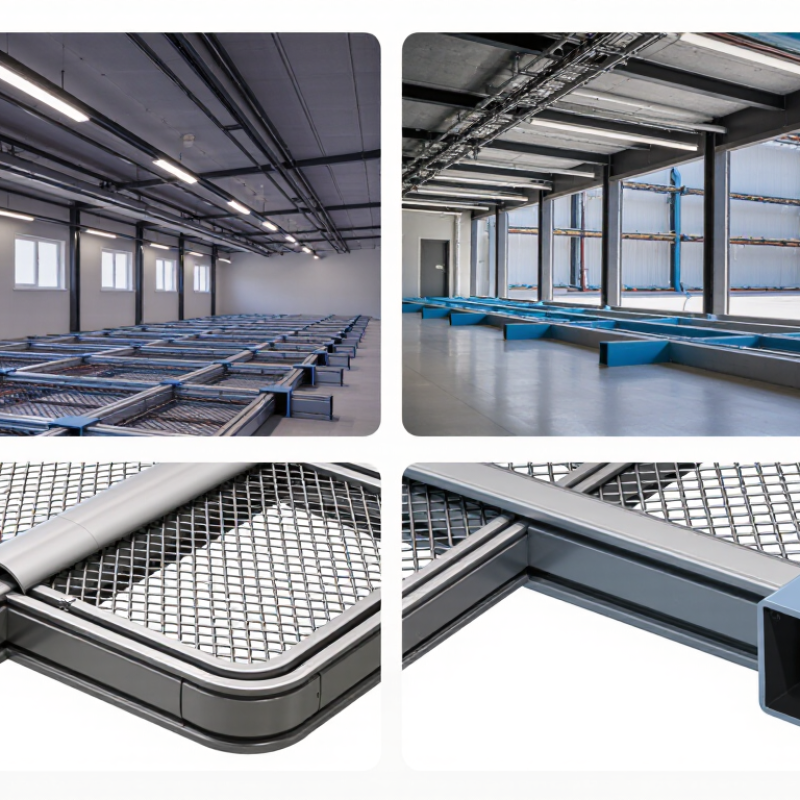
What Are the Top Mesh Cable Tray Manufacturers?
Mesh cable trays are open cable-support systems made from welded steel wires. They carry power, control, data, and communication cables across industrial and commercial spaces. The mesh structure looks simple, but its geometry affects strength, ventilation, and installation speed.
Most trays use longitudinal wires, cross wires, side rails, and formed bends. Zinc-coated steel suits ordinary indoor areas. Stainless steel performs better in humid, corrosive locations. Some projects require painted finishes for added protection. A practical tray should have smooth welds and no sharp edges. Small defects can damage cable jackets during pulling.
The open grid improves airflow around warm cables and lets installers inspect the route quickly. Cut sections are useful around columns, panels, and equipment racks. Common applications include factories, data rooms, offices, transport facilities, and renewable-energy buildings. Tray width, load capacity, wire diameter, and support spacing must match the cable bundle. Site experience matters here. A catalog rating may not reflect vibration, dust, or crowded pathways.
Reliable manufacturers should provide material certificates, load tests, dimensional drawings, and corrosion information. Their technical teams should explain bonding, grounding, bends, and support hardware clearly. Compliance with relevant electrical and structural standards also deserves verification. I have found that installation errors often matter more than tray price. Even a strong tray can fail when supports are spaced too widely. Engineers should recheck real site conditions instead of trusting assumptions.
When evaluating mesh cable tray manufacturers, begin with verifiable engineering evidence, not catalogue photography. MarketsandMarkets estimates the global cable tray market could grow from about USD 5.8 billion in 2023 to USD 8.7 billion by 2028. This growth increases supplier choice, but it also creates uneven quality. Ask for load tables, deflection results, weld inspection records, and coating test data. A dependable manufacturer should explain how wire diameter, mesh spacing, and span length affect cable support. The tray should also comply with applicable standards, such as IEC 61537 or NEMA VE 1, where relevant.
Look closely at corrosion resistance. Salt spray testing, coating thickness, and cut-edge protection matter in humid plants and outdoor installations. Manufacturers with ISO 9001-based quality systems may offer stronger process control, but certification alone proves little. Check batch traceability and sample consistency. Grand View Research reports that cable tray demand is expanding steadily, although market estimates vary by product scope and region. That difference deserves attention. It means buyers should not treat every forecast as equally precise.
Practical experience reveals smaller details. Does the splice fit without forcing it? Are sharp weld points removed? Can installers adjust the tray around a crowded junction box? Short answers matter. Request a production sample before signing a large contract. I would also inspect packaging, because bent mesh often begins with poor stacking rather than poor steel. No evaluation method is perfect; even a strong factory audit can miss performance issues after installation.
This benchmark uses a practical 100-point procurement model for comparing mesh cable tray manufacturers. Product quality and compliance receive the highest weighting, followed by load performance, corrosion protection, installation efficiency, customization, delivery capability, and lifecycle value.
Leading mesh cable tray manufacturers compete through engineering details, not merely catalog size. MarketsandMarkets projects the global cable tray market to rise from about USD 4.3 billion in 2023 to USD 7.1 billion by 2028, reflecting strong demand from data centers, factories, and renewable-energy projects. Scope varies by report, however. That difference matters when comparing suppliers.
The strongest manufacturers usually offer welded steel mesh, stainless steel, and corrosion-resistant finishes. Their product strengths include consistent wire spacing, smooth edges, quick-cut accessories, and reliable load tables. A well-designed tray can improve airflow around power and data cables while reducing installation time. Some suppliers also provide seismic bracing guidance, bonding accessories, and tested splice connections. IEC 61537 and NEMA VE 1 remain useful references for mechanical performance and cable-support practices.
Field experience still exposes weaknesses. A tray may pass a catalog load test yet perform poorly when crowded with heavy cables. I would check span limits, deflection data, coating thickness, and accessory fit before approving a system. Do not trust appearance alone. Grand View Research’s cable tray analysis identifies infrastructure expansion and industrial automation as major growth drivers, but corrosion exposure remains highly site-specific. Salt spray, chemical dust, and poor cutting practices can shorten service life. Leading manufacturers therefore distinguish themselves through traceable testing, responsive technical support, and practical installation documentation. Their claims should be verified against project conditions, not accepted automatically.
| Anonymous Manufacturer Profile | Primary Material Options | Common Surface Finish | Typical Width Range | Typical Wire Diameter | Product Strength | Common Applications | Relevant Standards |
|---|---|---|---|---|---|---|---|
| Profile 01 — High-Volume Industrial Producer | Carbon steel; stainless steel available | Electro-galvanized or hot-dip galvanized | 50–600 mm | 3.5–6.0 mm | Broad size selection, repeatable welding quality, and efficient production for large projects | Factories, warehouses, commercial buildings, and utility rooms | IEC 61537; project specifications based on NEMA VE 1 |
| Profile 02 — Stainless-Steel Specialist | 304 and 316/316L stainless steel | Mill finish, pickled, or passivated | 50–600 mm | 4.0–6.0 mm | High corrosion resistance, strong hygiene performance, and suitability for aggressive environments | Food processing, pharmaceutical plants, marine areas, and chemical facilities | IEC 61537; stainless-steel material requirements under EN 10088 |
| Profile 03 — Fast-Installation System Producer | Pre-galvanized or electro-galvanized carbon steel | Zinc coating with optional protective paint | 50–300 mm | 3.5–5.0 mm | Tool-friendly couplers, easy cutting, and reduced installation time for standard cable routes | Office buildings, retail facilities, data rooms, and light industrial projects | IEC 61537; coating practices commonly specified by ASTM A653 or equivalent |
| Profile 04 — Heavy-Duty Infrastructure Producer | Heavy-gauge carbon steel; stainless steel for special environments | Hot-dip galvanized after fabrication or protective coating | 100–900 mm | 5.0–8.0 mm | Higher mechanical capacity, robust supports, and suitability for long or heavily loaded spans | Power plants, transportation infrastructure, process facilities, and outdoor routes | IEC 61537; NEMA VE 1 where specified by the project |
| Profile 05 — Custom Fabrication Specialist | Carbon steel, stainless steel, and aluminum | Galvanized, powder-coated, anodized, or mill finish | 50–1,000 mm | 3.0–8.0 mm | Made-to-order bends, reducers, tees, crosses, and non-standard dimensions | Complex plant layouts, retrofit work, OEM equipment, and confined spaces | IEC 61537; material and coating requirements defined by the project |
| Profile 06 — Low-Voltage and Data-Cabling Specialist | Light-gauge steel, aluminum, or stainless steel | Electro-galvanized, powder-coated, or anodized | 50–450 mm | 3.0–5.0 mm | Open construction for ventilation, visibility, cable access, and low-voltage segregation | Data centers, telecommunications rooms, security systems, and control panels | IEC 61537; separation and installation requirements set by the electrical design |
Note: The profiles are anonymized and represent common manufacturer capabilities in the mesh cable tray market. Actual load ratings, span distances, dimensions, coatings, and compliance claims must be verified against the relevant product data sheet and project specification.
When assessing top mesh cable tray manufacturers, standards should guide the decision. Reliable producers design systems around IEC 61537 or NEMA VE 1 requirements. These standards address load capacity, electrical continuity, dimensions, and mechanical performance. A certificate helps, but it does not replace product inspection.
Material selection depends on the installation environment. Electro-galvanized steel suits dry indoor rooms and moderate corrosion risks. Hot-dip galvanized steel offers stronger protection for humid areas and utility spaces. Stainless steel is more suitable for coastal, chemical, or hygienic environments.
Powder coatings can add color and protection, but surface preparation remains critical. Poor preparation can cause early peeling.
Quality control should continue from wire selection to final packaging. Inspectors should verify wire diameter, mesh spacing, weld strength, tray straightness, and edge smoothness. Load tests should reflect real support spans, not only ideal laboratory conditions. Coating thickness also needs recorded measurements at several points. Small variations matter.
Traceability matters.
Batch numbers, inspection records, and material certificates help identify problems quickly. During site checks, installers should look for cracked welds, sharp projections, and distorted joints. Some manufacturers provide impressive documentation, yet their packaging may allow trays to bend during transport. That weakness is easy to overlook. A stronger evaluation combines factory evidence, sample testing, and practical feedback from completed installations. Even experienced buyers should review assumptions when climate, cable weight, or support spacing changes.
Selecting the right mesh cable tray manufacturer requires more than comparing prices. The International Energy Agency’s Electricity 2024 report projects global electricity demand growth of about 4% annually through 2026. That expansion increases pressure on cable management systems in data centers, factories, and commercial buildings.
Start with technical evidence. Ask for load ratings, wire diameter, weld strength, corrosion testing, and dimensional tolerances. Products should align with recognized requirements, such as IEC 61537 or NEMA VE 1, where applicable. A serious manufacturer can provide test records, material certificates, and traceability for each production batch. Look closely at the finish. Zinc coating, stainless steel, or powder coating may suit different humidity and chemical conditions. “One finish fits all” is a warning sign.
Manufacturing consistency matters on site. Check cutting accuracy, connector fit, edge smoothness, and available accessories. Poor alignment can create sharp edges and costly installation delays. Research and Markets estimates that the global cable tray market will continue expanding through the decade, but growth does not guarantee quality. Some suppliers outsource critical processes, and this is easy to miss. Request a factory audit or independent inspection. Review lead times, replacement support, and installation guidance before signing. The cheapest quotation may become expensive after rework. I would also test a small sample under realistic loading, because catalog photos rarely reveal weak welds or awkward joints.