
For over 50 years, we have dedicated ourselves to providing Industry with best in class wire management solutions and to helping solve mission critical issues.

The needs of today’s schools and universities are changing fast. When it comes to anticipating and meeting those needs, MonoSystems is in a class of its own.

For the past five decades, we’ve made it our business to offer more value to our partners, which in turn provides greater value to their customers.
When your car’s air conditioning turns weak at a stoplight but cools again on the highway, the condenser fan deserves attention. It pulls air through the condenser, helping release heat from the refrigerant. Without enough airflow, high-side pressure can rise, cooling may fade, and the compressor may face extra strain. The exact symptoms vary. A fan that stays still is a clue, not a diagnosis.
This guide explores why an Ac Condenser Fan Car may stop working, from a blown fuse or failed relay to damaged wiring, a worn motor, or a faulty temperature-control signal. ASE-certified technicians use a useful diagnostic principle: “Check the power path before replacing the part.” That means looking for fan operation under the right conditions, inspecting connectors for corrosion, and testing circuits with suitable equipment. Keep hands and tools clear of moving fan blades; some fans can start unexpectedly. Small details matter. A loose plug can mimic a failed motor. So can a weak connection that only fails when hot.
You’ll also learn what you can safely observe and when a professional diagnosis makes sense. Do not assume that replacing the fan will solve every cooling problem. Sometimes it won’t. Proper testing can separate an electrical fault from a refrigerant or airflow issue, helping avoid unnecessary parts and repeat repairs.
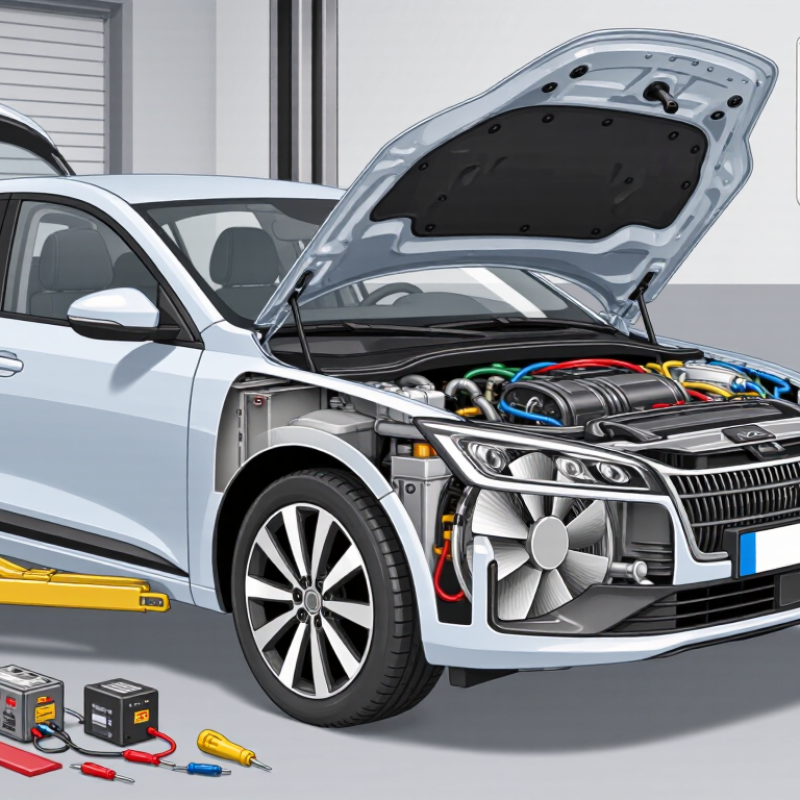
Why Is My Car AC Condenser Fan Not Working?
How the Condenser Fan Rejects Heat and Responds to A/C Demand
The condenser fan pulls air across the condenser, helping release heat from refrigerant after it leaves the compressor. With the car stopped or moving slowly, this airflow matters even more. When the fan does not run during A/C operation, high-side pressure and vent temperatures may rise. You might notice weak cooling at a red light, then colder air once the car moves. That pattern is a clue, not proof. Fan problems can involve a fuse, relay, wiring, motor, or control signal, and the exact setup varies by vehicle.
Tips: With the engine safely off, look for leaves or debris blocking the fan. Never put fingers near the blades; they can start unexpectedly. If the fan stays still while the A/C is on, note whether the engine temperature also climbs. Don’t assume the fan must run every second: some systems switch it on only when conditions call for more cooling.
A technician can check power and ground at the fan, then compare operation with A/C pressure and temperature readings. This helps separate a failed motor from a control issue. Replacing parts by guesswork gets expensive, and diagnosis is not always tidy. Stop using the A/C if the engine overheats, and arrange an inspection.
Why Is My Car AC Condenser Fan Not Working?
Check Fuses, Relays, Wiring, and the Fan Motor in That Order
When the air conditioner is running, a stationary condenser fan can point to an electrical fault. Some vehicles control the fan differently, so check the owner’s manual before testing. A fan may not run under every condition. That detail matters.
Start with the fuse. Use the vehicle’s fuse diagram to find the circuit, then inspect the fuse for a broken element. Replace it only with one of the same rating. If it blows again, stop there; a short circuit may need professional diagnosis. Next, check the fan relay. A relay can click and still fail, so sound alone proves little. If your manual identifies an interchangeable relay with the same specifications, swapping them briefly can help narrow the fault.
Then inspect the wiring and connectors with the engine off. Look for loose plugs, rubbed insulation, corrosion, or heat damage near the fan. Keep hands and tools clear: electric fans can start unexpectedly. Finally, test the fan motor using the procedure specified for your vehicle. A motor that receives proper power and ground but will not turn may be faulty. Diagnosis is not always tidy. A weak connection can imitate a failed motor, so avoid replacing parts based on one quick check.
Check these components in order: fuses, relays, wiring and connectors, then the fan motor. The bar values show diagnostic sequence only—not failure rates or test results.
A nonworking condenser fan can make air conditioning weak at idle and may raise engine temperatures. Before replacing it, check whether the fan is receiving power and ground. The vehicle uses a nominal 12-volt system, but charging voltage may be higher with the engine running. Check the wiring diagram, since some fans use electronic speed control rather than a simple on-off feed.
Keep hands clear. The fan can start unexpectedly. With the fan commanded on, back-probe the connector using a digital multimeter set to DC volts. Compare the supply reading with battery voltage under the same conditions. A near-zero reading may point to a fuse, relay, wiring, or control issue. Do not assume the fan should run just because the AC button is lit; vehicle temperature and system pressure can affect operation.
Check ground under load, too. Measure voltage between the fan’s ground terminal and battery negative while the fan is commanded on. A noticeable voltage drop suggests resistance in the ground path. A meter reading alone can fool you: an unloaded circuit may show voltage but fail when the motor draws current. Avoid jumping terminals unless the circuit design is confirmed. That shortcut can damage control electronics. If power and ground remain sound but the fan stays still, inspect the connector and motor, then follow the vehicle’s service procedure.
| Test | Test conditions and method | Typical result | What an unexpected result may indicate |
|---|---|---|---|
| Battery reference voltage | With the engine off and the vehicle at rest, measure directly across the battery posts using a digital multimeter. | A charged 12-V lead-acid battery is commonly about 12.4–12.7 V at rest. Voltage varies with battery condition and temperature. | A low reading can affect fan operation and make other tests inconclusive. Charge and assess the battery before proceeding. |
| Confirm fan operation is commanded | Use a suitable scan tool or the vehicle’s specified test procedure to request condenser-fan operation. Keep clear of the fan; it can start unexpectedly. | The control system reports or commands fan operation under the test conditions specified for that vehicle. | If the fan is not being commanded, check relevant diagnostic trouble codes, sensor inputs, control strategy, and service information before testing the motor circuit. |
| Fan fuse and supply | With the fan commanded on, check the specified fuse electrically at both test points. Use the wiring diagram to identify the correct circuit. | Both sides of a powered fuse should show similar voltage, generally close to system voltage under the specified test conditions. | Voltage on one side only suggests an open fuse. No voltage on either side may point to a missing upstream supply, relay, or control command. Replace a fuse only with the specified rating. |
| Voltage at the fan connector | With the fan commanded on, back-probe the identified power and ground terminals using the correct wiring diagram. Measure across the motor supply and ground where the circuit design allows. | A conventional two-wire fan should receive voltage close to system voltage when commanded on. The exact value depends on vehicle design and operating conditions. | Little or no voltage can indicate an open supply, fuse, relay, connector, wiring, or control issue. Some fans use electronic or pulse-width-modulated control, so a changing meter reading may be normal. |
| Power-side voltage drop | While the fan is commanded on and the circuit is carrying current, measure between the battery positive post and the fan’s power terminal. | A small drop is expected; about 0.5 V or less is a common diagnostic guideline for many 12-V circuits. Follow vehicle-specific specifications. | A larger drop suggests resistance in the positive-side wiring, fuse contacts, relay contacts, or connectors. Inspect for looseness, corrosion, heat damage, or broken strands. |
| Ground-side voltage drop | With the fan commanded on, measure between the fan ground terminal and the battery negative post while the circuit is loaded. | A good ground path typically has a low drop; about 0.2 V or less is a common guideline. Use the vehicle manufacturer’s limit where available. | A higher reading suggests resistance in the ground wire, ground point, or connector. Clean and secure the ground connection, then retest under load. |
| Fan motor and connector inspection | Switch the ignition off before unplugging components. Inspect terminals, wiring, and the fan assembly for corrosion, melting, damage, or obstruction. Check continuity only with the circuit de-energized and isolated as specified. | Connectors are secure and undamaged; the fan can rotate freely when safe and appropriate to check. | A damaged connector, seized fan, or open motor can prevent operation even when supply and ground tests pass. Avoid applying battery power directly unless the service procedure permits it. |
| Controlled-circuit note | Before probing, identify whether the fan is relay-switched, electronically controlled, or pulse-width modulated. Use a high-impedance meter and approved back-probing methods. | Measurements match the vehicle’s wiring diagram and service specifications. | Do not short terminals or pierce sealed wiring unnecessarily. If a meter cannot interpret a controlled waveform, use the specified scan-tool or oscilloscope procedure. |
Safety: Park on a level surface, apply the parking brake, and keep hands, tools, and clothing away from moving fans. Electric fans may operate with the engine off. Vehicle-specific wiring diagrams and service specifications take precedence over general voltage guidelines.
When diagnosing a car AC condenser fan, start with the system off and allow pressures to equalize. At a refrigerant temperature near 80°F, static R-134a pressure is about 87 psig. A useful reference, not a verdict. The reading reflects refrigerant temperature, so measure the system’s temperature rather than assuming it matches the outdoor air. Sun-warmed lines or a recently running engine can skew the comparison. Static pressure alone cannot confirm the correct refrigerant charge; even a low charge may show a seemingly normal reading while liquid refrigerant remains. I might be tempted to blame the fan immediately, but that pressure reading cannot prove the fan is faulty.
Next, observe whether the fan runs when the AC is commanded on, while keeping clear of moving parts. A fan that stays still can contribute to rising high-side pressure and weaker cooling, especially at idle. Yet some vehicles control fan speed or operation according to temperature and system demand. Check the vehicle’s service information before judging its behavior. If static pressure is far from the temperature reference, recheck the temperature and gauges, then have the system inspected. Don’t vent refrigerant or open the sealed circuit; a qualified technician can test pressures and electrical controls safely. Sometimes the first reading needs a second look.
A car’s condenser fan may stay quiet during a brief startup check, yet fail when the air-conditioning system is working hard. Test it with the engine running, the cabin set to maximum cooling, and the vehicle safely stationary. Watch the fan from a distance as the system operates. A quick idle test can mislead; silence alone does not prove the motor has failed. That matters.
Confirm operation under load, then check for likely causes such as a blown fuse, a faulty relay, damaged wiring, or a worn fan motor. A scan tool may help command the fan and reveal whether the control system responds. If the fan runs intermittently, note when it stops and whether cooling worsens at low speeds. Avoid reaching near moving blades, even when they appear still.
Tips: Follow SAE J639 safety practices when inspecting automotive air-conditioning systems. Keep clear of fans and belts, and do not open or loosen refrigerant lines; the system can be pressurized. Use suitable test equipment and vehicle-specific service information. If electrical checks or refrigerant work are unfamiliar, have a qualified technician continue the diagnosis. A neat-looking connector can still have poor contact, so inspect carefully.