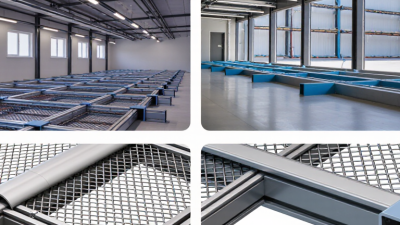
For over 50 years, we have dedicated ourselves to providing Industry with best in class wire management solutions and to helping solve mission critical issues.

The needs of today’s schools and universities are changing fast. When it comes to anticipating and meeting those needs, MonoSystems is in a class of its own.

For the past five decades, we’ve made it our business to offer more value to our partners, which in turn provides greater value to their customers.
Choosing the right wire mesh tray is not simply a matter of comparing widths, finishes, or prices. It is a practical decision about airflow, cable weight, installation time, and future maintenance. A tray that looks adequate in a showroom may become crowded above a hot production line.
Michael Turner, a senior cable-management engineer with over twenty years of field experience, explains: “A tray should serve the cable system, not merely hold it.” That principle matters when selecting tray depth, wire diameter, support spacing, and connection hardware. It also reminds us to examine the complete installation, not one isolated product detail.
Start with the cable environment. Will the wire mesh tray carry power cables, data lines, or both? Check the expected load, bend radius, corrosion exposure, and available ceiling space. In a damp plant, galvanized steel may offer better protection than a basic finish. In a clean indoor room, a lighter tray could reduce labor and handling.
Think ahead.
Leave room for growth. A tray filled to its limit may look efficient today, yet complicate repairs tomorrow. I have seen projects choose the lowest initial cost and later spend more on extensions, rerouting, and downtime. That is an uncomfortable lesson, but an important one.
This guide examines material, load capacity, dimensions, accessories, installation conditions, and long-term value. It also questions a common assumption: the largest tray is not always the safest choice. The right wire mesh tray should fit the cables, the building, and the people who must maintain it.
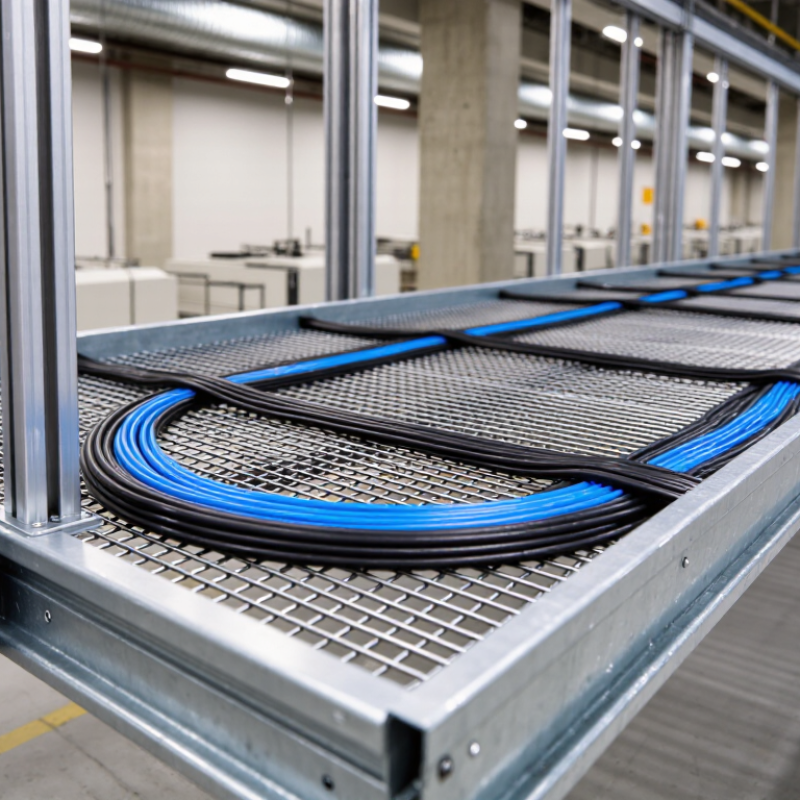
How to Choose the Right Wire Mesh Tray?
Understanding Wire Mesh Tray Types and Applications
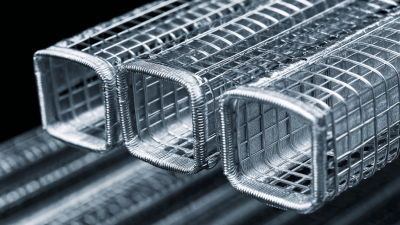
Wire mesh trays support and organize power, control, and data cables in commercial and industrial spaces. Their open design improves ventilation and makes inspections easier. Welded mesh trays suit general cable routing, while heavier versions support larger cable bundles. Perforated trays provide extra surface contact for smaller cables and accessories. Stainless steel options perform better in humid, corrosive, or washdown areas. The right choice depends on load, cable diameter, span, and installation environment.
Application details matter more than appearance. A server room may need low-profile trays with smooth edges and careful separation between power and data cables. A factory may require stronger supports, corrosion resistance, and easy cleaning. Check the tray’s working load, deflection limits, connector quality, and grounding path. Confirm local electrical and fire requirements before installation. In practice, cable growth is often underestimated. Leave usable space for future circuits. A small mistake matters.
Tips: Measure the full route, including bends and vertical drops. Keep power and communication cables separated when required. Choose compatible supports and inspect every cut edge for sharp points. Review the layout with an experienced installer. Field conditions can change, so revise the design when heat, dust, moisture, or unexpected cable weight appears.
The chart compares the practical suitability of common wire mesh tray types across typical installation environments. Scores from 1 to 5 indicate relative suitability based on corrosion resistance, hygiene requirements, durability, and installation flexibility. Stainless steel is preferred for corrosive or hygienic environments, while electro-galvanized and powder-coated trays are commonly used for indoor applications.
Selecting a wire mesh tray starts with the cables, not the tray. Measure each cable’s outside diameter and weight per metre. Add the values for the planned bundle, then include spare capacity for future installations. A crowded tray can restrict cooling and complicate maintenance. Leave practical space around control and power cables where separation is required.
Support spacing matters. A tray carrying heavy power cables may need shorter spans than one carrying communication cables. Check the manufacturer’s load tables for the exact tray width, depth, material, and support distance. Also consider vibration, moisture, dust, and temperature. I once underestimated cable weight after using catalogue data for a smaller conductor. The first calculation was wrong.
Routing requirements shape the tray layout. Confirm the minimum bending radius before placing horizontal bends, vertical drops, or tee sections. The tray should allow cables to turn without sharp pressure points. Measure doorways, beams, and equipment clearances on site. A drawing can miss a pipe running directly above the proposed route. Keep high-voltage and sensitive signal cables separated when project standards require it. Use suitable clamps or ties, but avoid excessive pressure on insulation. Review the route with installers before fixing supports; a technically correct path may still be awkward to access.
How to Choose the Right Wire Mesh Tray?
Selecting materials begins with the environment, not the tray price. Indoor offices usually need less protection than coastal plants or wastewater facilities. Pre-galvanized steel can suit dry, controlled rooms. Hot-dip galvanized steel offers stronger protection outdoors. Stainless steel, especially 316, is safer near salt spray and chemical washdown. Aluminum reduces weight, but it needs careful isolation from dissimilar metals.
The NACE IMPACT Study estimated global corrosion costs at 2.5 trillion US dollars, or 3.4% of global GDP. That figure shows why material selection deserves engineering attention. Check humidity, chloride exposure, cleaning chemicals, temperature, and airborne pollutants. ISO 12944 provides useful corrosion-environment classifications for protective coatings. IEC 61537 also defines performance requirements for cable management systems, including mechanical and electrical considerations.
Small details often decide service life. Cut edges, scratched coatings, and trapped water can become early corrosion points. Add drainage and avoid horizontal pockets where possible. In mixed-metal assemblies, use compatible fasteners or insulating washers. This is frequently overlooked. A thicker coating is not always better if installation damages it. Field inspections should record coating condition, rust staining, and water accumulation. However, laboratory ratings cannot perfectly predict every site. Real exposure may be harsher than the specification. Recheck the choice after installation.
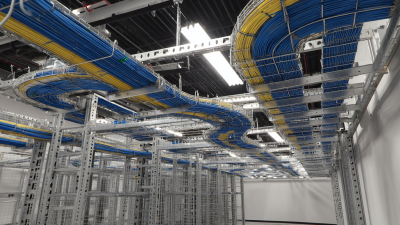
Installation method affects safety, access, and maintenance. Ladder trays suit heavy power cables and provide strong ventilation. Perforated trays offer better support for smaller control cables. Wire mesh trays are lighter and faster to install, especially above crowded ceilings. However, they can flex when overloaded. According to IEC 61537:2023, cable support systems should be assessed for mechanical strength, corrosion resistance, and electrical continuity. Site conditions matter more than appearance.
Accessories should match the installation, not merely complete it. Use couplers for straight runs, radius bends for fiber or data cables, and dividers between power and communication circuits. Covers help in dusty areas. Bonding jumpers support electrical continuity across joints. The U.S. Bureau of Labor Statistics reported 145 fatal occupational injuries involving electric current in 2022. That figure reinforces the need for grounding, secure fasteners, and clear working space. A tray may look stable, yet a loose joint can create movement, noise, or cable damage.
Tips: Check the expected cable load before ordering. Leave spare capacity for future circuits. Remove sharp edges near bends. Verify earthing continuity after installation. Use corrosion-resistant hardware outdoors. I have seen neat installations fail because support spacing was guessed. Recheck the manufacturer’s load tables and local electrical requirements. Small oversights become expensive later.
How to Choose the Right Wire Mesh Tray?
Evaluating Cost, Maintenance, and Long-Term Performance
The lowest purchase price rarely reflects the real cost of a wire mesh tray. Compare material thickness, surface treatment, load capacity, and installation time. A tray with stronger wires may cost more initially, but it can reduce sagging across longer spans. Measure cable weight carefully, including future additions. Guessing here can create expensive corrections later.
Maintenance begins with access. Choose a tray that lets technicians inspect cables without removing heavy covers or nearby equipment. Smooth welds and rounded edges help prevent cuts during installation and cable damage over time. In humid or industrial areas, corrosion resistance matters greatly. Check coating quality, drainage, and compatibility with the surrounding environment. Small rust spots often spread unnoticed.
Long-term performance also depends on supports, joints, and alignment. Use properly spaced supports and secure connections according to engineering requirements. I have seen well-made trays fail because installers placed supports too far apart. That mistake was not obvious on the first day. Keep spare capacity for growth, but do not oversize every section without reason. Excess material increases cost and may complicate routing. Review actual site conditions, maintenance habits, and expected cable changes before choosing.